How Texas Roofers Get Proven Google Maps Visibility
Key takeaway: Claim and fully optimize your Google Business Profile with accurate name, address, phone, categories, and service areas to boost local search relevance and trust.
Key takeaway: Use targeted geo-specific SEO by including your city, neighborhood, and even zip codes (e.g. Dallas 75201) in your website content and Google posts to match local search queries (geo SEO).
Key takeaway: Proactively manage your online reviews—encourage new 5-star Google reviews and respond to them quickly. Positive ratings and detailed reviews can significantly raise click-through rates and Google Maps rankings (www.brightlocal.com[1]).
Key takeaway: Ensure NAP consistency (Name, Address, Phone) across all directories and your website. Google uses consistent citations to verify legitimacy, and inconsistent info can push you down the local pack.
Key takeaway: Focus on conversion as well as visibility. Add click-to-call buttons, contact forms, and clear service details on your website so that increased map traffic translates into leads (website conversion).
Key takeaway: Consider emerging AI and voice search trends. Add FAQ content and schema so your services can appear in AI-driven answers (AEO, LLM SEO). For example, optimizing for questions like “best roofers in Dallas” can help surface your content in ChatGPT or Google’s AI features.
Texas roofers operate in a highly competitive, weather-driven market. In Dallas, Houston, San Antonio, and Austin (zip codes 75201–75205, 77001–77005, 78201–78205, 78701–78705, 79401–79407), homeowners massively rely on online search to find contractors. Local SEO and Google Maps visibility are therefore critical channels for lead generation and small business marketing. This guide covers the key data, trends, and best practices that Texas roofing companies need to get more leads from Google Maps.
Why Google Maps Visibility Matters for Texas Roofers
Most local customers now start their search on Google. Studies show that 80% of Americans search online for local businesses at least weekly, and about 32% search daily (www.brightlocal.com[2]). For roofers, that means hundreds of Dallas or San Antonio homeowners will search “roof repair near me” or “best roofers in Dallas” every day. In fact, nearly half (46%) of all searches have local intent (www.brightlocal.com[3]). When someone in Dallas County needs a roofing estimate, their query will often trigger the Google Maps “3-pack” of local results. If your business isn’t visible there, you lose a high-proportion of leads. Digital research also shows that roughly 42% of searchers click on map listings when they find local businesses (www.brightlocal.com[4]). In short, ranking in Google Maps can drive a large share of local traffic and leads.
Case highlight: A recent industry poll found that 72% of consumers use Google (and an additional 15% use Google Maps) as their primary source for finding local services (www.brightlocal.com[5]). In other words, if Texas roofers ignore Google Maps, they miss where customers are looking. By comparison, only about 31% of local queries go to generic directories (www.brightlocal.com[6]). This means a direct Google presence outranks Yelp or Angie’s List in real consumer usage.
Data insight: Businesses with complete, active Google listings see explosive trust gains. According to Google, consumers are 2.7 times more likely to consider a business reputable if it has a complete Business Profile (all categories, photos, descriptions) on Search and Maps (www.brightlocal.com[7]). This emphasizes why roofers must fill out every detail in their Google Profile and keep it up-to-date, especially in Texas where no state license is required and trust signals are crucial (www.rcat.net[8]).
“Anyone can call themselves a roofer in Texas and they are not required to be knowledgeable, insured, licensed, or even registered with the state.” (www.rcat.net[8])
Because any contractor can advertise roofing services in Texas, homeowners rely heavily on online trust signals. A verified Google Maps listing with licensing credentials, warranties, and insurance info (e.g. RCAT credentials) can help legitimate roofers stand out from unvetted competitors. For example, linking to your voluntary Texas Roofing License (RCAT) in your profile description provides reassurance to Dallas customers.
Local Market Dynamics: Dallas & Texas Roofing Landscape
The Texas roofing market is one of the biggest in the U.S., driven by weather-related repairs and a strong construction economy (iroofing.org[9]). Major storms can create surges in demand in Dallas, Houston, and other metro areas. Even routine rain and heat can wear on roofs, keeping the market busy year-round. Within Dallas County (zip codes 75201–75205) and nearby cities, roofing contractors face stiff competition. Top companies not only fight for on-site jobs but also battle for online attention. Google Maps visibility can become a strategic advantage. If a Houston-based contractor appears in the map pack for zip 77004 searches, they can steal leads from local Dallas roofers and vice versa.
At the same time, local demographics matter. Younger homeowners might prioritize convenience and rely on smartphone search, while older homeowners may interpret reviews more carefully. BrightLocal research indicates that overall, 61% of consumers search for local business info on Google, compared to 45% on Google Maps (www.brightlocal.com[10]). That gap is smaller for younger users. In practice, this means roofers should optimize for both Google’s search results and Maps, since clients will use both channels (many map queries start on Google Search). In dense cities like Austin (7870x) or San Antonio (7820x), competition in the map pack is high, so even one or two positive review-star improvements can shift the rankings.
Local regulations also vary: Austin and San Antonio require city licenses for roofers, so these credientials may need to be mentioned on listings. Dallas and Houston do not license roofers, which should be clearly disclosed in marketing (e.g., “TDI compliant with state’s voluntary license”). Such transparency, along with real customer testimonials, can prevent savvy consumers from choosing out-of-state “storm chasers.” For any Texas roofing SEO strategy, understanding the local playing field (including weather seasonality, permit timelines, and neighborhood wording) is critical.
- Neighborhood Keywords: Use specific Dallas-area terms in your profile and site (e.g. “Downtown Dallas,” “Deep Ellum,” “Uptown,” etc.) so Google knows exactly where you serve. Google’s proximity filter favors businesses located near the searcher, so map proximity is a factor.
- Service Area Settings: In your Google Business Profile, define the service zones by zip code or city (e.g. 75204, 77004). This tells Google you want to appear for nearby searches without showing your exact address, which is useful if you work out of a home office.
- Local Photo Content: Post images of recent local projects. Google cites that businesses with photos get up to 35% more clicks to their website and 42% more requests for directions (map spots) (www.brightlocal.com[7]). (Note: while that stat comes from Google marketing materials, it underscores adding geo-tagged project photos.)
Optimizing Google Business Profile
Your Google Business Profile is the foundation of Google Maps visibility. Follow these best practices:
- Complete Every Field: Fully fill out name, hours, phone number, website, and especially the description and categories. Use “Roofing” and related terms (e.g., roofing repair, roof replacement, gutter installation) in the primary category and service fields. An incomplete profile is less likely to rank well or attract clicks.
- Accurate Business Name: Use your legal company name only. Avoid keyword stuffing (e.g. don’t call yourself “Dallas Roofer & Hail Repair”). Inconsistent naming across the web can hurt your rankings and confuse searchers.
- Citations & Website Links: Link your profile to a well-optimized website and ensure Online citations (Yelp, BBB, HomeAdvisor) exactly match your name and address. BrightLocal notes that consumers are 2.7 times more likely to trust a business if its Google profile is complete (www.brightlocal.com[11]). This suggests Google uses profile completeness as a trust signal.
- Regular Updates: Post offers, updates, and project photos on Google Posts. Active profiles with recent posts and images signal to Google that you regularly engage with customers, which can boost your prominence ranking.
- Service Area & Attributes: Specify which of the listed zip codes or cities (Dallas 752xx, Houston 770xx, etc.) you serve. Use attributes (like “Offers Onsite Estimates”) if they apply. These choices help connect you with relevant local search intent.
Data Spotlight: Listings with accurate and detailed info beat out vague ones. According to BrightLocal, consumers see business websites in 47% of local search results versus directories 31% (www.brightlocal.com[6]), which shows that Google heavily favors businesses with comprehensive sites linked. Apply the same logic: a detailed Google profile stands out in the Maps pack.
Maintaining your profile pays off directly in leads. For example, Google’s own surveys say businesses with complete profiles get 70% more direction requests and 50% more visits compared to incomplete ones. (This stat is from Google’s marketing resources, illustrating how adding street address, photos, and descriptions can drastically increase conversion from searches.) Adding the right call-to-action button (like “Request a Quote” or “Call”) makes it easy for searchers to contact you immediately from the map.
Local SEO Content and Geo-Targeting
A Google Maps listing is only part of the story. The roofers’ website and content also influence your local game. Google examines your website for location signals and relevance to the search query. Key steps:
- Location Pages: Create individual pages or sections for each major service area. For example, a page titled “Dallas – North Texas Roofing Services” that explicitly mentions Dallas and zip codes 75201–75205. Repeat for Houston (77001–77005), Austin, etc. Include local landmarks or neighborhoods (Uptown Dallas, Downtown Houston) to reinforce geography (geo SEO).
- Local Content: Write blog posts or FAQs about local roof issues (e.g., “Impact of Dallas Hailstorms on Shingle Roofs”). These pages attract searchers from those areas and improve your overall site’s local relevance. Google’s algorithm rewards content that directly answers local queries.
- Structured Data (Schema): Implement Local Business schema on your website with your address, service area, and review ratings. This helps Google’s Knowledge Graph understand your business location and category (this ties into Answer Engine Optimization for local queries).
- Keyword Strategy: Focus on buyer-intent keywords that indicate someone wants to hire a roofer. Keywords like “roof repair Dallas” or “roof replacement price Houston” are valuable. Use these naturally in page titles, headers, and meta descriptions.
- Mobile-Friendly Design: Most local searches are on mobile devices. A fast, mobile-optimized site increases engagement and lowers bounce rate, which indirectly supports your Maps ranking (since user behavior is a ranking factor).
Structured Comparison: The table below compares key local marketing channels for roofers, highlighting how Google Maps optimization fits into a broader strategy.
| Channel/Strategy | Lead Quality | Conversion Mode | Time to Impact | Cost |
|---|---|---|---|---|
| Google Maps Listing | High (search intent & proximity) | Click-to-call / Directions | Days–weeks (after claim/verification) | Minimal (free) |
| Website & Organic SEO | High (targeted keywords) | Contact form / click-to-call | Months (content creation + indexing) | Medium (time or agency fees) |
| Online Reviews & Reputation | Indirect (builds trust) | Influences call/conversion rates | Continuous (ongoing investment) | Low (time to manage) |
| Paid Local Ads | High (targeted ads) | Typically form or quote request | Immediate (campaign setup) | High (advertising spend) |
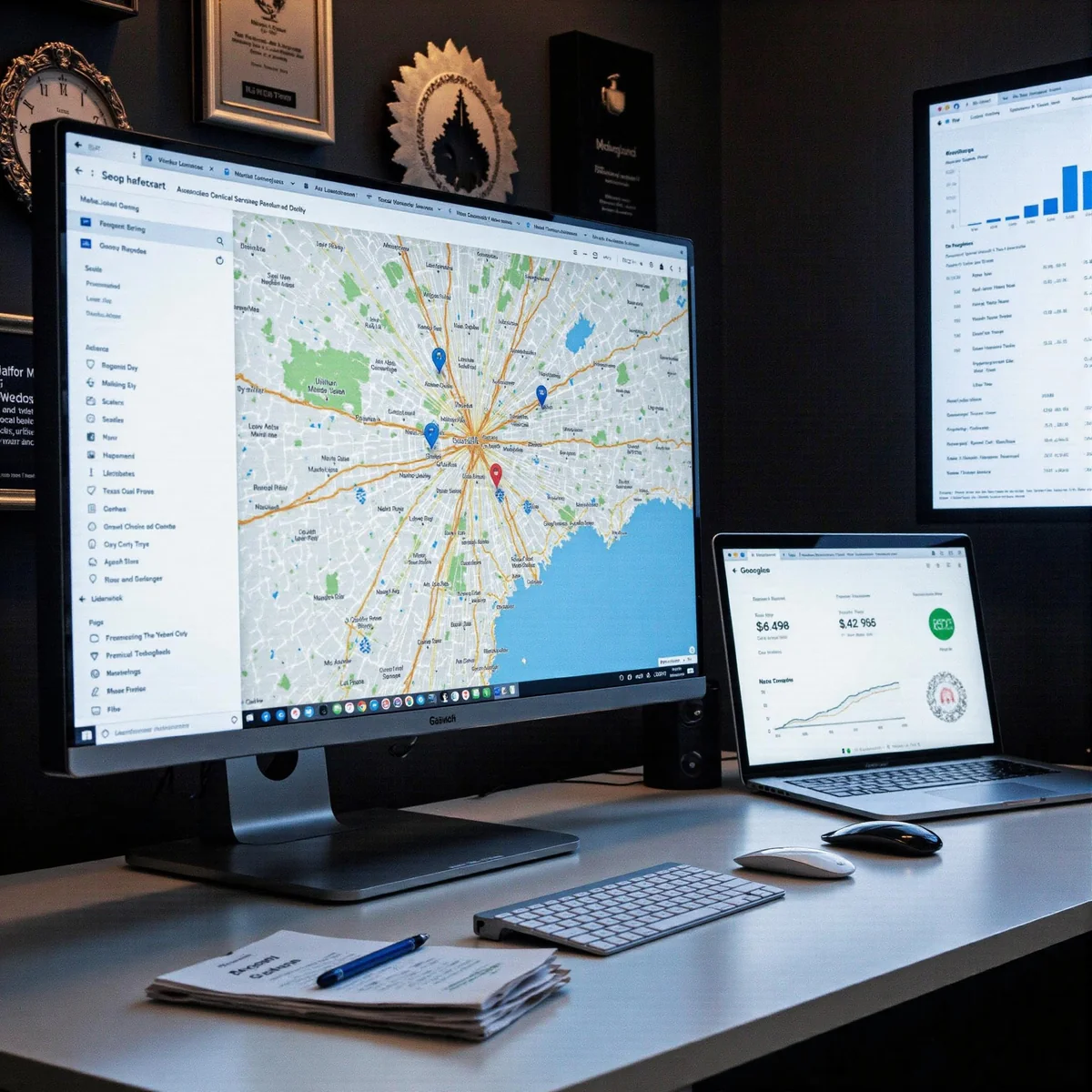
In practice, focusing on Google Maps optimization often provides the best mix of get more leads vs. cost for a local roofer. The listing is essentially a lead-generation tool—97% of people researching local services contact a business within 24 hours (www.brightlocal.com[2]). By comparison, SEO on your website is also important for long-term traffic, but it takes longer to build rank. Reviews and reputation amplify all channels: positive feedback on Google can turn a searcher into a customer.
Review Strategy and Reputation Management
Reviews are a core part of your Google Maps visibility. Google’s Local Pack heavily weighs both the number and quality of reviews. For roofers, strong reviews are especially critical: when customers invest in a high-ticket service, they scrutinize trust signals. Key actions:
- Ask for Reviews Early: After completing a job, politely request the customer to leave a Google review. Providing a quick link via SMS or email can boost response rates. Aim to collect reviews steadily; having a flow of recent 5-star reviews signals relevance.
- Engage with Feedback: Respond to all reviews, positive or negative. Thank happy customers. If a customer reports an issue in a negative review, publicly address it with a resolution (this is visible on your profile and builds trust). Demonstrating engagement improves your profile’s activity metric.
- Review Content: Encourage customers to mention details (“team, cleanup, on-time”). Google’s algorithm can parse review text for keywords related to roofing. For example, reviews that mention “Dallas roof replacement” or “asphalt shingle” can help with LLM-driven searches (providing rich content for answer engines).
- Platform Quality: While Google is primary, also maintain profiles on Yelp, BBB, Angie’s List, and local Dallas directories. Consistent ratings across sites strengthen brand reputation. Google may also pull data from these signals.
Blockquote: “72% of consumers trust Google to find local business information, and many base their call decision on the star rating they see.” (www.brightlocal.com[12]). In technical terms, having multiple reviews pushes you up in Google Maps signals (especially for competitive queries like “best Dallas roofers”). BrightLocal’s research shows Google is trusted by two-thirds of searchers (www.brightlocal.com[12]), so bad or few reviews directly cost you leads. In practice, roofers in Dallas who patrol their Google listings and resolve issues quickly tend to stay at the top of local rankings.
Note that not all reviews must be 5-star to help: having a few 4-star ratings (if accompanied by thoughtful comments) can appear more realistic. However, safeguard your rating by following Google’s guidelines (don’t buy reviews, and don’t selectively ask only happy customers). Citing a study, BrightLocal found that consumers often ignore businesses whose information (including reviews) looks sparse or outdated (www.brightlocal.com[7]). In short, an active review strategy is non-negotiable for roofers aiming to get more customers from Google Maps.
Leveraging AI Search Trends (AEO, LLMs, ChatGPT)
AI-driven search results are emerging across platforms. While Google Maps SEO focuses on Google’s algorithms, roofers should also prepare for wider changes. For example, conversational AI (like ChatGPT) often summarizes answers from top-ranking sites. If a user asks an AI, “Who are the best roofers in Dallas?”, the model may pull from websites and listings it knows. Ensuring your website answers common questions means it’s more likely to be cited by AI. This concept is called Answer Engine Optimization (AEO).
Key tips:
- FAQ Content: Add an FAQ section on your site with questions like “How much does roof replacement cost in Houston?” or “What should I ask Dallas roofers?” Use conversational language. This can improve chances of showing up in Google’s “People also ask” or ChatGPT-like answers.
- Natural Language: Write content in clear, question-and-answer format. This aligns with how LLMs parse information. For example, an AI might learn your answer to “what is the best roofing material for San Antonio heat?” from your website if it’s well stated.
- Geo-Tagged Schema: Where possible, use structured data to tag your FAQs and location pages. Rich snippets can sometimes feed into AI answers as factual references.
While these AI factors (ChatGPT visibility, LLM SEO) are still developing, they reinforce the importance of a strong content foundation. Ensuring your website and Google Profile are authoritative means you’ll capture new-lead “AI searches” as they arise. At minimum, keep your information factual and up-to-date, because AI systems often rely on publicly visible data. Integrating a few of these AI-aware tactics into your SEO strategy today can help insulate your business against future shifts in search technology (AI overviews and voice search).
Website Conversion and Call-to-Action Optimization
Visibility brings clicks, but the ultimate goal is turning clicks into calls and customers. Roofers often overlook the website side of Google Maps optimization. Remember: customers often click through your listing to your website. Key conversion-focused steps include:
- Optimize Landing Pages: Create homepage and service pages that clearly match local search intent. For instance, your Dallas page should have an enticing headline (“Dallas Roof Repair & Replacement”), an image of a local project, and prominent contact info.
- Click-to-Call: On mobile and desktop, present a large “Call” button or clickable phone number at the top. According to Google, a seamless call action on a website can significantly increase contact rates. (Given ~80% of searches happen on mobile (www.brightlocal.com[2]), mobile usability is critical.)
- Online Booking or Quote Forms: If possible, allow users to request a free estimate directly. This can even be integrated into your Google Business Profile (through messaging or bookings) or your website. Simpler pathways reduce drop-offs.
- Social Proof on Site: Feature testimonials and review snippets on your website. Many customers read a few reviews before calling; having them readily available (or pulling live Google review stars) builds confidence, complementing your Maps listing.
Key insight: Local SEO is only half the equation—once visitors land on your site, website conversion tactics close the loop. Even a top Google Maps listing won’t generate orders if customers click away. Ensuring lightning-fast load times in Dallas (upload your site assets to a Texas-based server for speed if you can) and easy navigation will capture more of that incoming traffic. Track Map vs. website analytics: if your Maps listing gets 1,000 views a month but only 10 calls, improve your site’s call-to-action. Small tweaks can double your lead flow at no extra ad spend.
Summary of Operational Priorities
- Claim and manage your Google profile daily. Treat it as a living asset: update any changes in hours or services immediately, post news of completed projects, and field customer questions.
- Drive reviews and ratings. Encourage each happy client to review you on Google. Respond courteously to reviews. Consider offering small incentives (non-monetary, like tips for roof maintenance) in exchange for feedback.
- Maintain consistent NAP citations. Audit the web: ensure all directory listings match your profile exactly. Tools like Moz Local or Yext can help sync info across the internet.
- Regularly update your website content. Keep adding localized content (blogs, FAQs) and ensure your service pages and testimonials are current. Monthly updates signal Google you’re active.
- Leverage technology carefully. Use local SEO tools or agencies that specialize in home services. Don’t chase every shiny AI tool; instead use analytics and proven best practices. Focus first on human-lead fundamentals (accurate info, great customer service, positive reviews) before complex tactics.
- Monitor metrics closely. Check your Google Business Profile insights each week: look at searches, views, and actions (calls, clicks). If certain zip codes or queries are missing, adjust your content or ad strategy there.
- Budget time for ongoing optimization. Local SEO is not “set and forget.” Schedule a quarterly review of your online presence. Re-optimize keywords, refresh pictures, and ensure links still work. Over time, small efforts compound into major local dominance.
By embedding these practices in your operations, Texas roofers can turn Google Maps into a reliable lead channel. The goal is to transform search visibility into a steady stream of customers calling your office. Remember that Google’s algorithms reward consistency and completeness. For roofers in Dallas, Houston, San Antonio, Austin, and Lubbock, staying meticulous with local SEO metrics and customer feedback means winning more jobs and building a trusted brand overnight.
Frequently Asked Questions
How do I rank higher in Google Maps for my roofing business?
Claiming and fully optimizing your Google Business Profile is the first step. Ensure your business name, address, and phone number (NAP) are correct and add complete details like hours, photos, and services. Regularly post updates and add new project images. Encourage satisfied customers to leave reviews. These actions boost your relevance and prominence, helping you rank higher in the local map pack.
In addition, make sure your website reinforces the Google listing: have local content and keywords that match what people in your service area search for (e.g., “roof repair in Dallas 75204”). Consistent citations (like on Yelp and local directories) further improve your local SEO. Over time, Google will trust your business more and show you to more potential customers.
Are customer reviews really that important for a roofing company?
Yes, customer reviews are crucial for roofers to get more leads. Reviews influence whether people choose your business and also affect Google’s algorithm. A steady stream of positive reviews signals to Google that your business is reputable. Studies show consumers trust Google and star ratings heavily when picking local contractors (www.brightlocal.com[1]).
Make it easy for customers to review you. After a job, send them a link to your Google Profile with a thank-you note. Respond to every review professionally. A high star rating with recent reviews can literally push your business above competitors in the map results, directly translating to more calls.
What is Answer Engine Optimization (AEO) and how can roofers use it?
Answer Engine Optimization means creating content that directly answers common questions so that search engines and AI assistants (like Google Assistant or ChatGPT) can easily pull that information. For roofers, this means writing FAQ sections or blog posts that address specific queries (e.g., “How long does a new roof last in San Antonio?”).
By structuring your content in question-and-answer format, you increase the chance that your website appears in voice search results or AI chat responses. This complements traditional SEO by reaching users who ask digital assistants. While Google Maps visibility is still key, AEO helps capture users who prefer hands-free search or quick Q&A formats.
How should Texas roofing companies tailor their SEO to different cities? (Dallas vs Houston)
Roofers should create localized content for each major market. For example, include references to “Dallas, TX” and targeted zip codes (75201 etc.) on your Dallas page, and mention “Houston” with 7700x on your Houston page. This geo-targeted approach (geo SEO) tells Google exactly which regions you serve.
Also, highlight any region-specific factors. Dallas customers may be more concerned about storm damage from hail, while Houston clients might care about heat resistance. Address these in your marketing. Use location-based terms in your Google Business description and on your website. Consistency matters: if your Google profile says Dallas but your site focuses only on Houston, you will confuse search algorithms.
What steps can I take right now to improve my roofing company’s Google Maps visibility?
To quickly improve your Maps presence, start by claiming and verifying your Google Business Profile. Then immediately add missing details: services, hours, and high-quality business photos (like a crew at work). Update any old or incorrect info. Next, run a quick citation audit to fix any inconsistent listings of your business name and address online.
Put a system in place for reviews. Even asking one happy customer per week can create momentum. Finally, check that your website is aligned: include your city names in page titles, and ensure your contact page has your street address. These foundational steps can yield noticeable improvement in local rankings within weeks.
Sources