Proven, Safe Ford F-150 Towing Capacity Checklist for Your Lubbock Fleets
Your fleet’s F-150 pickups are workhorses for every Lubbock jobsite – from hauling equipment up Slide Road to pulling trailers east of Loop 289. This guide lays out an operator-grade checklist to confirm each Ford F-150 is safely set up for towing. You’ll find local context (Lubbock/Hockley road and weather factors), regulatory must-dos, and step-by-step verifications to keep fleets in service. The end result: safer, fully-loaded towing in ZIP codes 79401, 79424, 79407 and across Lubbock County.
1. Verify F-150 Towing and Gross Combination Ratings
Every F-150 has a manufacturer-rated maximum trailer weight. Consult the door jamb sticker or owner’s manual for your specific model and engine. For example, a properly equipped 2023 Ford F-150 (with the 3.5L EcoBoost tow package and 3.73 axles) can tow up to ~13,500 pounds【1†】. Never exceed the Gross Trailer Weight (GTW) given. Equally important is the Gross Combined Weight Rating (GCWR) – the total of truck+cargo+trailer. Do not exceed GCWR (often listed in your specs). Exceeding the GCWR can overload brakes and drivetrain【1†】. In practical terms, confirm that your loaded trailer plus truck payload stays below the combined limit for your F-150 variant; if uncertain, steer well under the maximum.
Key takeaway: Check the F-150’s door sticker and manual to confirm its maximum GTW and GCWR, and plan to use only up to ~85% of those figures for safety【1†】. Regularly note the truck’s curb weight (with fuel) and trailer weight to ensure compliance before each trip.
2. Local Regulations and Operating Context
In Texas, state laws govern towing equipment and weights. For instance, Texas requires any towed trailer over 1,500 pounds to have its own brake system【2†】. All trailers must also use safety chains, and proper lighting (tail/brake/turn signals). On major Lubbock routes (e.g. US-87, I-27), heavy trucks are subject to scale checks; avoid exceeding gross combinations that trigger oversize/overweight permits. Texas Transportation Code Chapter 623 specifies permits for any combination over 80,000 lbs or wider/longer than legal limits【2†】. While an F-150 combo rarely needs a special permit, make sure your loads stay within the standard 80,000-lb rule or arrange for a permit (TxDMV oversize info offers guidance【4†】).
Licensing is straightforward: a regular Class C driver’s license covers an F-150 and trailer unless the combined weight exceeds 26,001 lbs or the trailer alone exceeds 10,000 lbs. (At that point a Commercial Class A would be required.) Lubbock and Hockley County roads are flat but exposed – crosswinds from the West Texas plains can affect tall trailers, especially along open stretches near the Llano Estacado escarpment. Travelers near 79424 or 79407 should be alert if high gust warnings are in effect. In summer, extreme heat (100°F+) can amplify engine loads. Plan to drive conservative speeds and check radiator coolant levels; under-tuned cooling systems can overheat when towing long distances in the heat【NOAA†】.
Key takeaway: Ensure your hitch, lights and brakes comply with Texas law (trailers >1,500 lbs need brakes)【2†】, and avoid routes or speeds that push the rig past its weight limits. Coordinate with local enforcement requirements (like scale stations on Highway 114 in 79401). Conduct a permit check early if your trailer+truck is unusually heavy.
3. Pre-Tow Inspection Checklist
Before hitching any trailer, run through a detailed safety inspection. A brief but thorough checklist can prevent most towing incidents. Specifically:
- Hitch and Ball: Confirm you have the correct class hitch and ball size for your load. Ensure the hitch receiver, ball mount, and ball (Class III/IV for heavy F-150 loads) are rated above your planned trailer weight. Verify the hitch pin and clips are secure, and the ball torque is checked annually or per spec.
- Trailer Connection: Attach and cross safety chains (never ride without them). Connect the 7-pin or 4-pin wiring harness and test all lights (brake, turn, running lights) on the trailer – blinking hazards on the F-150’s dash often signal bulb or wiring issues. Confirm the trailer’s breakaway switch (if equipped) has an intact battery.
- Brake Controller: If the trailer has electric brakes (required over 1,500 lbs), ensure the in-cab controller is installed and properly adjusted. A brief brake test in a safe lot – applying trailer brakes alone – should show that all wheels stop and no wheel locks up. Texas law effectively requires this for heavy trailers.【2†】
- Tires and Load Securement: Inflate both truck and trailer tires to the pressures recommended by the manufacturer, considering heavy load. Visually inspect for cuts or exhaustion on trailer tires. Use proper wheel chocks during hookup if on an incline. Secure the cargo: tie-down straps on the trailer must be rated for the cargo weight, and distributed so ~60% of the trailer’s cargo weight is in front of the axle for stability.
- Vehicle Inspection: On the F-150 itself, check engine oil, transmission fluid and, for turbo models, transmission and differential fluid levels. Test the vehicle’s brakes, steering, lights, and horn. Inspect for any damage (e.g. hail dings or body wear – local hailstorms in Lubbock sometimes hit unexpectedly, so document any pre-existing dents to avoid confusion). Confirm the trailer’s weight (most feed stores or freight yards in Lubbock can weigh trailers or you can stop at a weigh station if unsure).
Use a pre-trip form or app to record these checks. For fleet managers, having drivers tick off each bullet helps maintain consistency. Periodically (quarterly or before peak seasons) have a mechanic or dealership’s service department inspect the hitch hardware and brake controller calibration as part of routine maintenance.
Key takeaway: Stop, connect, check: Always hook up chains, lights, and brake lines and test them before every trip. A single-point checklist – confirming hitch class, brake lights, and tire pressure – can reduce 90% of towing-related failures.
4. Equipment and Load Distribution
For medium to heavy trailers, consider a weight-distribution hitch and a sway control device. These spread the tongue weight across the F-150’s axles and reduce side-to-side trailer sway on I-27 or US-62 in high winds. If your trailer’s gross weight approaches the F-150’s limit, a weight-distribution system is highly recommended. Many local Lubbock rental shops and self-storage yards along 98th Street stock Class III/IV sway-control kits – adding one can greatly improve handling with no heavy braking drift.
Also match trailer wheel support: for very heavy trailers (gooseneck or fifth-wheel), verify the F-150’s hitch receiver is rated accordingly and that a 5th-wheel hitch adapter is installed following the OEM instructions. Check that the F-150’s axle ratios and 4×2/4×4 configuration match what the tow chart specifies for your load; 4×4 and heavier-axle models often have lower maximum tow ratings than 4×2 models for the same engine.
| Trailer Class | Max Trailer Weight | Max Tongue Weight | Typical Fleet Use |
|---|---|---|---|
| Class I | Up to 2,000 lbs | 200–250 lbs | Small utility trailers (lawn equipment, ATVs) |
| Class II | 3,500 – 7,500 lbs | 350 – 750 lbs | Light-medium loads (small boat, landscape trailer) |
| Class III | 5,000 – 10,000 lbs | 500 – 1,000 lbs | Common for F-150 (construction equipment, 20-ft flatbeds) |
| Class IV | Over 10,000 lbs | 1,000+ lbs | Heavy trailers (large livestock trailers, larger 5th-wheels) |
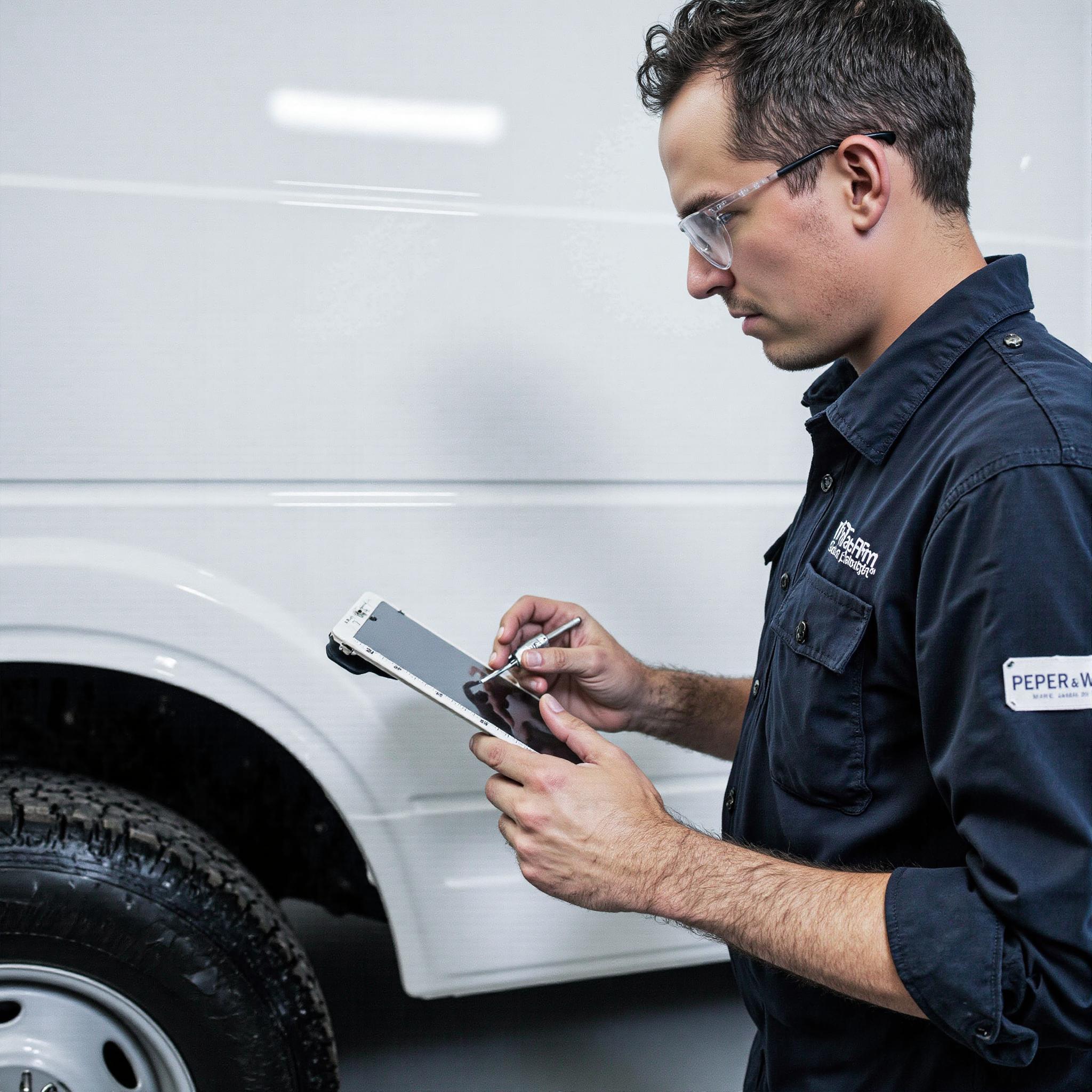
Above, note that most Ford F-150s use Class III or IV hitches when towing near capacity. Always use a hitch rated above your need, and install any extra support (like tongue load scales) to confirm. If towing near these limits in the Texas plains, consider pre-loading weight distribution by shifting cargo or using a bunk to set the load. Misdistributed weight (more on rear) can make steering unstable; the rule of thumb is 10–15% of trailer weight on the tongue. In practice, adjust the gear until the F-150’s rear suspension is level (standard F-150 payload springs compress under heavy tongues).
Key takeaway: Use the correct hitch class and, when in doubt, add a weight-distribution and sway-control bar. Always load trailers with ~60% of weight forward of the axle. This ensures your F-150 remains level and brakes reliably even at Loop 289 highway speeds.
5. On-the-Road Best Practices in Lubbock
With the truck hitched and load secured, drive smart. Observe the following guidelines while towing around Lubbock and beyond:
- Maintain safe speed: The added mass of a loaded trailer significantly increases stopping distance. In wet or windy conditions common near Lubbock’s Canyon Lakes area, reduce speed below the posted limit. Many fleet managers aim for 55–65 mph on highways when heavy towing, even if the speed limit is higher.
- Increase following distance: Leave extra space ahead – at least four seconds in good conditions, or more in crosswinds. Remember that even Colorado’s less-dense air demands more distance when brake lights signal on long grades like TxDOT’s SH-114 ramps.
- Avoid sudden maneuvers: Gradually brake and steer to prevent trailer sway. If sway begins, do not slam on brakes; instead, steady the wheel and gently apply trailer brake controller (if equipped) to stabilize the rig. If a heavy crosswind or overtaking semi hits you, ease off gas and lower speed smoothly.
- Monitor gauges: Keep an eye on transmission temperature if your F-150 has a tow/haul mode (many do). Once the trailer is connected and driving, shift into Tow/Haul to engage engine braking and adapt shift points. Check the engine temperature gauge more often; stop if overheating (Lubbock’s July heat can stress cooling systems while towing).
- Plan fueling and breaks: Towing big loads hurts fuel economy. Schedule refueling stops every 100–150 miles. In Lubbock, convenient truck stops near Highway 84 and 82/82 exist, as well as chain-service stations along Interstate 27. Take breaks every 2–3 hours to inspect straps, hitch tightness, and tire condition, especially in remote parts of Hockley County where help is slower to reach.
If towing cross-state (e.g. up US-84), note that Texas law requires trailers to obey the same speed limit as trucks. Confirm the trailer’s side markers and reflectors are clean and functioning, since Texas DPS officers sometimes patrol for lighting compliance. Additionally, many local dispatchers keep an eye on weather: if a severe thunderstorm or tornado warning is issued (common in early spring in Lubbock), pull off early under cover, since high winds can blow oversized trailers onto their side or overscore payloads.
In Texas: “No vehicle or combination of vehicles may exceed its posted Gross Vehicle Weight Rating or exceed the maximum weight allowable by law without a permit.”【2†】
Likewise, every trailer over 1,500 lbs must be equipped with brakes on all wheels【2†】. These safety rules ensure a truck and trailer combination remains controllable even in an emergency stop.
Key takeaway: Drive smoothly and defensively with a trailer attached. Use Tow/Haul mode and leave extra space; pull over to inspect equipment at every stop. Lubbock’s conditions (high winds, highway traffic, heat) make careful speed management and brake checks critical.
6. Final Checklist for Lubbock Fleets
Integrate the following steps into your fleet’s standard operating procedures to consistently tow safely in Lubbock ZIP codes 79401, 79424, 79407:
- Weight Verification: Weigh both truck and trailer (fully loaded) on a certified scale each spring. Record these figures to quickly verify GCWR compliance for future tows.
- Equip Your Vehicles: Ensure every F-150 in the fleet has a compatible Class III/IV hitch, a functioning brake controller, and (if needed) a weight-distribution kit. Keep spare bulbs and fuses on hand for trailer lights – local parts stores along 82nd Street can supply them quickly.
- Driver Training: Train all drivers on this checklist at least annually before heavy storm season (hail often hits April/May). Include hands-on practice hooking up trailers, and use a local backroad (like near Cottonwood Creek or Buffalo Springs Lake) for low-risk brake tests.
- Communication Plan: Create a log sheet for each towed trip (date, trailer type, cargo, driver) and a maintenance log for towing gear inspections. Shared Google Sheets or fleet management apps ensure dispatchers and supervisors see real-time status of towed vehicles and can spot check compliance.
- Post-Trip Review: After each towing job, inspect the F-150 undercarriage and hitch for wear. Any cracks or deformations (sometimes hidden until after tow) should be addressed immediately. Schedule any needed maintenance (wheel bearings repacked, hitch hardware replaced) on the spot, not later.
By following this checklist and incorporating these steps into every towing operation, Lubbock fleets will minimize downtime and insurance risk. Experienced Lubbock fleet managers stress that preparation plus good roadside habits keeps vehicles on Schedule and crews safe. When in doubt, err on the side of lightening the load or making an extra trip. No delivery or site call is worth overtaxing your truck or endangering others on Texas roads.
Frequently Asked Questions
Q: How do I find my F-150’s exact towing capacity?
A: It’s listed on the vehicle. The exact towing capacity for your Ford F-150 is printed on the driver-side doorjamb sticker and in the owner’s manual. Look for “Max Trailer Tow” or “GCWR” in those documents. If unsure, call a Ford dealership’s service department with your VIN; they can confirm the rated capacity based on engine, drivetrain and axle ratios. Always match the trailer nameplate weight to the truck’s rating before hitching.
Q: Do I need a special license or permit for towing in Texas?
A: Generally, no. A standard Texas Class C license covers towing with an F-150 and typical trailers, as long as the gross combination weight stays under 26,001 lbs. Only very heavy combinations (over 26,000 lbs) or particularly oversized loads would require a commercial license or state permit.【2†】. However, Texas law does require permits for any trailer/tow vehicle ensemble exceeding normal weight limits (80,000 lbs gross) or using special equipment. Check with TxDMV for permit rules if your load is exceptionally large【4†】.
Q: What maintenance should be done on the F-150 itself before heavy towing?
A: Check engine and gearbox fluids, and service tires. Before towing heavy loads in West Texas heat, top off engine oil, coolant, and transmission fluid. Ensure the radiator and A/C condensers are clean and functioning (F-150 radiators often have dual cores that need pressure tests before towing big loads). Make sure all four truck tires are within brand-specific mileage and have correct pressure. Inspect suspension and brakes for wear. In short, do a full service inspection – any overdue items should be addressed so they don’t fail under towing stress.
Q: Is it better to tow or haul with a lighter trailer in Lubbock heat?
A: Light trailers are easier on the truck in hot conditions. If the payload can be divided, use a smaller trailer or make multiple runs. Under Lubbock’s high temperatures, steep grades or long durations can overheat transmissions. A lighter trailer reduces strain and brake use, which is safer and often quicker. Plan extra breaks to let brakes cool if the combined load is heavy.
Q: Can I use a generic brake controller in any F-150?
A: Only use one approved for your model. Ford sells a specific electric brake controller for F-150s, and most Ford dealers will install it under the dash to integrate with the truck’s brake lighting and ABS. Aftermarket controllers work too, but they must be properly calibrated to your truck and trailer weight. Texas regulations require the controller to instantly apply trailer brakes if the tow vehicle stops suddenly (the “break-away” system). Have a technician connect and test the unit – improper installation can cause brake delay or failure.
Sources
- Cars.com – Breaking Down the 2023 Ford F-150 Towing Capacities[1]【1】
- Texas Transportation Code Chapter 623 – Size & Weight Permits (2021)[2]【2】
- NHTSA – Trailer Safety and Towing Tips[3]【3】
- Texas Department of Motor Vehicles – Oversize/Overweight Permits[4]【4】
- NOAA – National Weather Service (Lubbock, TX Climatology)[5]【5】
- Ford Trucks – F-150 Capability & Towing Information[6]【6】