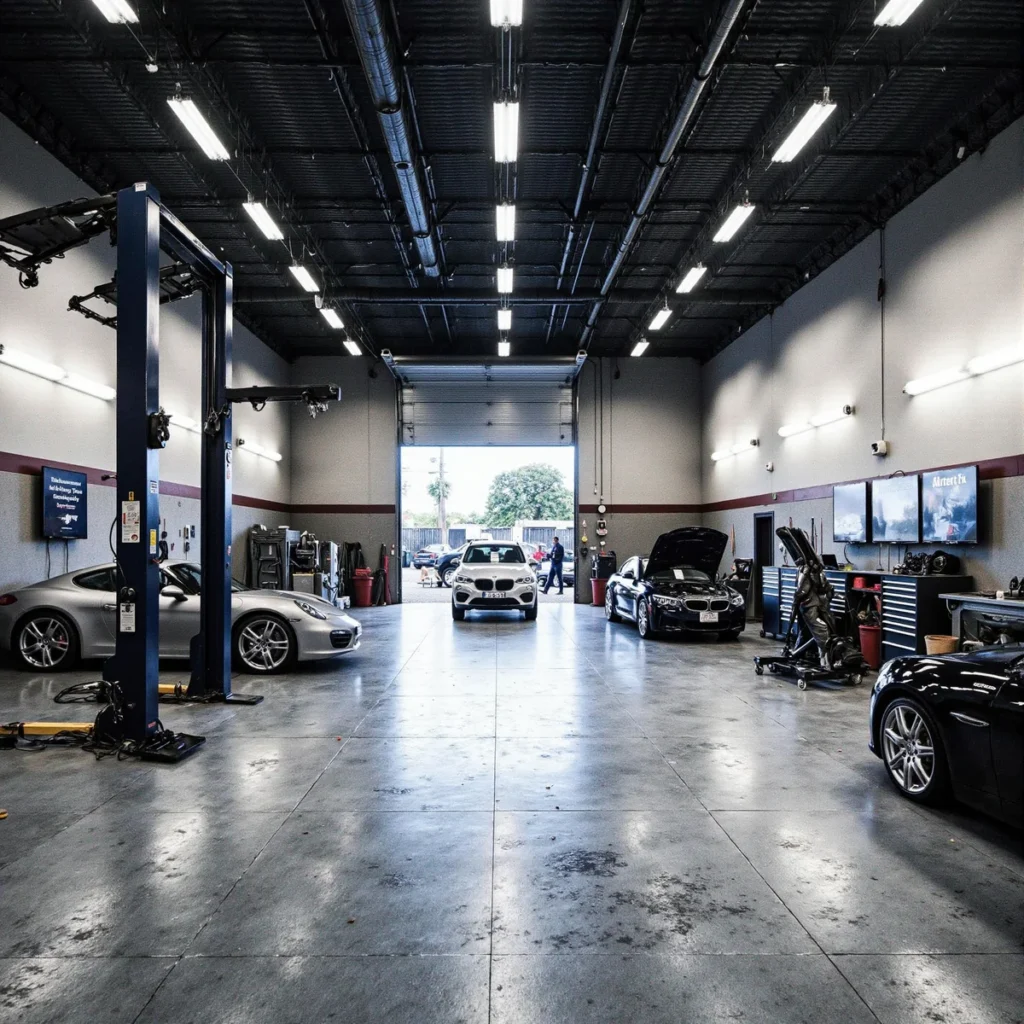
"Auto repair shop in Lubbock, Texas, technician documenting hail damage on vehicle in inline service bay with task lighting a

Proven, Safe Ford Truck Maintenance Checklist for Lubbock Owners

Key takeaway: In West Texas, routine maintenance saves costs and prevents breakdowns – follow Ford’s recommended schedule closely to keep fleets running reliably.

Key takeaway: Texas’s hot, dry climate and seasonal storms demand special attention to cooling, air filters, and body health for Ford trucks in Lubbock.

Key takeaway: Use common sense safety in every service: support the truck securely on stands, disconnect battery before work, and wear proper PPE to prevent accidents.

Key takeaway: Check fluid levels (oil, coolant, brakes, transmissions, power steering) monthly and replace them on schedule; heat jackhammers can speed fluid degradation in Lubbock’s 100°F summers.

Key takeaway: Inspect tires and brakes every month, especially before and after towing or long trips. Proper tire pressure in extreme heat helps prevent blowouts (www.aaa.com[1]).

Key takeaway: Make use of state guidelines: Texas no longer forces annual passenger vehicle safety inspections as of 2025, but pro-active checks ensure compliance and safety (www.dps.texas.gov[2]).

Key takeaway: Keep thorough records of all services and inspections. In local fleets this pays off when servicing multiple ZIP codes (79401, 79424, 79407) with varied driving conditions.

Lubbock’s Driving Environment and Its Demands

Ford trucks in Lubbock face harsh conditions that affect long-term reliability. South Plains heat often exceeds 100°F in summer and can load vehicle cooling systems and engines. Frequent dust and occasional hailstorms add abrasive wear to filters, finishes, and wipers. For example, a high hailstorm in Lubbock can number in the thousands of individual dents across a large fleet, so cover vehicles if possible during spring and early summer storms. At the same time, winter nights can dip below freezing, so thermostats and radiators should be checked before seasonal shifts.

Local roads in Lubbock and surrounding Hockley County vary from smooth city streets (Downtown 79401) to rough farm roads and construction zones in the north (79424) and south (79407). Potholes and washboard dirt roads accelerate wear on suspension, alignments and tires. Drivers often tow trailers (farm equipment, livestock, work gear) behind F-150 or Super Duty trucks, increasing stress on the drivetrain and brakes on every hill. Under these combined local stressors, a proven maintenance program is essential to keep trucks safe and available.

“Regularly inspect your tires for optimal air pressure and tread wear to reduce the risk of unexpected blowouts” (www.aaa.com[1]).

This AAA tip is especially relevant in West Texas: under-inflated tires will overheat on hot Loop 289 asphalt, risking sudden failures. To summarize this section, understand your context: Lubbock’s harsh climate and varied terrain mean routine maintenance is not optional but mandatory for safety and uptime. Every Ford truck owner here should adopt a regimen that prepares vehicles for local conditions, because failure to do so invariably leads to breakdowns.

Core Monthly and Quarterly Maintenance Items

Every Ford truck owner should keep a simple recurring checklist and address these items frequently:

  • Engine Oil & Filter: Check oil level every month, especially in hot weather. Use the manufacturer-recommended oil grade (full-synthetic is common in newer F-150s and is advised for high heat) and change oil every 5,000–7,500 miles or at least twice a year. In Lubbock, heavy summer hauling can shorten oil life, so stay on the safe side of the schedule.
  • Coolant Level & Condition: Monthly verify coolant and antifreeze level and condition. Lubbock’s heat stresses cooling systems; ensure the mixture meets Ford’s specs. Replace coolant based on Ford’s interval (often every 5 years or 150K miles), or sooner if you see discoloration or debris. Also inspect radiator and hoses for cracks; heat and vibration can degrade rubber lines over time.
  • Brake Fluid: Check brake fluid reservoir monthly. West Texas dust can seep into calipers and rotors, and overheated brakes degrade fluid. Flush and replace brake fluid according to Ford’s recommendations (commonly every 2 years) to prevent moisture buildup, which can cause corrosion and failure in the system.
  • Transmission & Transfer Case Fluids: For 4WD trucks (common in rural Lubbock), inspect transfer case fluid regularly. Change automatic transmission fluid as recommended (often 30-60K miles; if towing often, lean toward the lower end). High ambient temperatures can cause transmission slip if fluid is degraded. When towing heavy loads (common on farms outside town), consider even stricter intervals.
  • Power Steering Fluid: Check the level monthly. Heavy steering effort in off-road or towing situations can heat and wear out power steering fluid. Top off as needed, and replace per Ford’s service schedule. If you hear whining noises when turning fully, test/replace the fluid early.

Key takeaway: Keep a simple calendar or digital reminder for each lubricant change. In Lubbock, replacing engine and chassis fluids proactively is a small cost that avoids tens of thousands in engine rebuild or transmission overhaul later.

Key takeaway: If your truck tows regularly (trailers, boats on nearby Buffalo Springs Lake, farm equipment), halve the intervals for transmission and brake fluid changes, as heavy loads magnify fluid stress.

Routine Tire, Brake, and Safety Inspections

Tires and brakes are safety-critical and wear faster under Lubbock conditions. Schedule these inspections:

  • Tire Inspection & Rotation: Check tire pressure monthly (including spare). The ideal pressure is printed on the door placard or owner’s manual. Add 2-4 psi more in very hot weather to offset heat expansion. Inspect tread for uneven wear, bulges, cuts or embedded objects. Rotate tires every 5,000–7,000 miles to even out wear, as front-heavy trucks tend to feather front tires. Proper pressure and rotation improve fuel economy on Texas highways and prolong tire life.
  • Brake System Check: Every month, visually examine brake pads, rotors, and linings (with wheels removed if possible). Listen for squeals or grinding which indicate worn pads. Dusty West Texas roads accumulate brake dust and grit, which accelerates pad wear and rotor corrosion. If possible, remove wheels seasonally and spray clean the brake assemblies. Replace pads and resurface or replace rotors when they reach Ford’s wear limits (typically less than 4mm for pads or grooved rotors). Bleed brakes annually to renew fluid.
  • Lights & Signals: Inspect headlights, tail lights, brake lights, turn signals, and hazard lights monthly. Texas roads include long rural distances; full lighting ensures visibility in dusk or dust. Now is the time to upgrade to brighter bulbs or LED replacements if legal, since many Lubbock streets have limited street lighting. Always replace dim or burnt-out bulbs immediately.
  • Steering & Suspension: Check steering components and suspension (ball joints, tie rod ends, shocks) during quarterly service. Potholes on FM 1585 or US 87 can loosen components. Because Lubbock County roads often have fiberglass casings, signs of looseness (excessive play in steering wheel) should be addressed quickly to avoid rollovers. Tighten any loose tie rods, and grease Zerk fittings if applicable.
  • Battery Health: Test battery and starter every 6 months (before summer and late winter). Extreme heat dramatically shortens battery life. Clean and tighten all battery terminals and ensure the hold-down bracket is secure against heavy vibrations from Texan fields or highways. Consider replacing the battery every 4-5 years regardless of apparent charge.

Case Highlight: A Lubbock construction company found that replacing worn-out brake pads before a June road trip saved over $5,000 in potential accident damage and downtime. This underscores that prevention pays off when servicing safety items on time.

Engine & Drivetrain: Deep Inspections and SOPs

Beyond monthly checks, Ford trucks require deeper schedule maintenance at certain mileages. Key items and their Lubbock context include:

  • Air Filter: Replace the engine air filter every 15,000 miles or sooner in dusty conditions. Lubbock’s high dust environment means filters can clog faster, starving the engine and raising fuel consumption. Check it at every oil change: if it looks grayish-tan, swap it out. A clean air filter maintains performance in hot weather by ensuring proper airflow.
  • Cabin Air Filter: If your Ford has HVAC (especially for tarped loads), change the cabin filter every year. Protects air conditioning/heater coils from pollen/dust. A plugged cabin filter can strain the blower motor.
  • Engine Belts and Hoses: Inspect belts (serpentine, accessory) and coolant hoses every oil change. West Texas heat can cause belts to glaze/crack and hoses to soften or split. Replace any belt with visible wear and all coolant hoses every 4-5 years, regardless of condition, to avoid mid-drive failures that strand trucks on rural highways.
  • Drivetrain Fluids: Check transfer case and differential gear oils at mid intervals. Ford often calls for 30K or 50K mile changes. Before heading onto oil field or ranch roads, confirm these fluids are fresh. Low differential fluid can cause axle overheating, especially under load or at highway speeds.
  • Fuel System: With Texas fuel variability, consider a fuel system cleaner or professional fuel-injection service every 30K miles. Debris or water contamination in fuel can plague trucks that sit or travel on unpaved farm lots. Also, check fuel tank vent lines and cap seals for integrity to prevent evaporation losses and misreads at pumps.

Key takeaway: Follow Ford’s scheduled service book for 30K, 60K, etc., milestone services. Do not skip these even if the truck seems fine – at 60,000 miles significant items like spark plugs (in gas engines) and PCV valves are often due for replacement. In West Texas, proactively servicing these items avoids unexpected failures during remote drives.

Key takeaway: Always use recommended replacement items and fluids (for example, Ford-spec synthetic oil and OEM coolant), as non-standard products can degrade performance, void warranties, and reduce longevity of complex components.

Special Focus: Towing, Four-Wheel Drive & Accessories

Ford trucks in Lubbock often carry heavy loads or outfitments. Don’t overlook these:

  • Trailer Brake Controller: If your truck has a trailer brake controller, test it regularly. Ensure properly balanced braking for trailers, especially given hilly West Texas sections like FM 1730 near Shallowater. Malfunctioning controllers can cause scrubbing brakes and additional stress on the truck’s drivetrain. Have it inspected at each annual service.
  • Four-Wheel Drive System: Use and exercise 4WD regularly even if mostly on pavement – engage it at least once a month. This circulates lubricants and checks for any binding or electronic faults. Every year or 30K miles, change the transfer case and front/rear differential oils when the truck is in 4WD mode to ensure fresh fluid throughout the system.
  • Upfits & Accessories: Lubbock trucks often carry boxes, ladder racks, and toolboxes. Inspect mounts and bolts annually, especially after driving on gravel near ranches. Loose beds or boxes shifting under hard stops can damage mounts or the bed itself. Apply anti-rust spray under bodies and on ladder racks if your trucks work near livestock pens or marinas on Lake Meredith.
  • Electrical & Sensors: Modern Fords have many sensors (ABS, TPMS, parking sensors). Clean and check them especially after muddy road use. Hail or sand can knock a sensor loose or crack a camera. Verify that 4WD actuator motors and linkages work by running through 4WD modes on paved ground without load.

Key takeaway: Heavy towing and four-wheel drive use introduce unique maintenance needs: plan for more frequent checks on brake fluid, transmission temperature performance, and frame connections.

Key takeaway: Keep trailer wiring clean and connectors free of corrosion to ensure brake and light signals always function correctly on Lubbock’s highways.

Seasonal & Regional Hazards Checklist

In Lubbock’s annual cycle, adjust maintenance seasonally:

  • Before Summer Heatwaves: Ensure cooling system is topped off and radiator is clean (no bugs or dust). Test the A/C system for proper cooling, as broken A/C on near-100°F days is both uncomfortable and can mask engine overheating issues. Consider a fan performance test or a thermostat check at 85-90°F ambient.
  • After Hail Storms: Hail can dent panels and pop out seals. Inspect body seams, windshield and lights for cracks or pinholes. Even if dents are superficial, a broken seal can lead to rust. File any insurance claims quickly. After a spring storm, immediately wash trucks with mild detergent to remove any leftover ice fragments or grit that could erode paint.
  • Pre-Winter Check: While winters in Lubbock are mild, nights can fall near freezing. Check antifreeze level again and test heaters/defrosters. Inspect tires’ tread depth (consider snow-rated if you live at higher elevations or Grady area) and change wiper blades before windy rain in November. Also inspect undercarriage for accumulated dirt; clear out debris to prevent corrosion or rodent damage during quieter winter months.

Key takeaway: Use each season’s changeover as a trigger to go through the major checklist: a thorough walk-around and fluid check in early spring (preparing for heat) and again in autumn (preparing for storms and cold).

Key takeaway: After navigating farm roads or construction in winter, check brake rotors for rust buildup, and remove it by driving and braking to stretch pads against the rotors briefly (gloves required if hands-on cleaning is attempted).

Texas Regulations & Lubbock Local Requirements

Texas vehicle laws have changed recently. As of Jan 2025, the Texas DPS no longer requires annual safety inspection on most personal vehicles (www.dps.texas.gov[2]). However, commercial trucks (used for hire or over certain weights) still must pass periodic inspections under Federal Motor Carrier Safety Administration (not covered here). For most Ford pickups and SUVs in Lubbock, this means you won’t queue for an official state safety inspection—but that doesn’t excuse neglecting safety. Your own inspection checklists essentially replace the state’s oversight.

Important local regulations to note:

  • Emissions: Lubbock is not in a state emissions zone, so smog checks aren’t required like in Dallas or Houston. Nevertheless, keep the EGR and catalytic systems in clean working order to avoid engine trouble codes and poor performance.
  • Towing/Equipment Permits: If towing wide loads or carrying heavy equipment, Texas law requires proper signage and lighting. Maintain your trailer hitch wiring and safety chains diligently to comply with TxDOT cargo securement rules.
  • Dealer/Service Records: For leased or financed vehicles, keep all service invoices on file. Financiers and insurers often require proof of maintenance to validate warranty claims or payouts. Good documentation of following Ford’s service schedule can also protect you if any dispute arises about condition.

The key operational policy is this: even without mandatory state inspections, operators must self-impose the discipline. In practice, that means running your maintenance program as if the state inspector might show up next week. Document everything: checklists, dates, odometer readings. Just as Texas law values prompt claim handling, here it pays to have an immaculate record of servicing in a centralized log or fleet management system.

Key takeaway: Treat scheduled maintenance as non-negotiable. Texas no-inspection law doesn’t replace a preemptive maintenance plan – it highlights that the responsibility is now fully on you.

Key takeaway: Use official guidelines as a baseline but tailor them to local hazards. For instance, if your Ford truck works on a West Texas oil patch, come up with a tighter schedule for hydraulic lifts and turrets than what’s printed in the owner’s manual.

Operational Priorities: Summary

For Lubbock’s Ford truck owners and fleet managers, reliability boils down to a few core priorities:

  • Preventive Checks: Inspect fluids, filters, tires, brakes, lights, and belts regularly – ideally with a standard checklist used for all service visits.
  • Schedule Adherence: Stick to the manufacturer’s interval schedule (oil changes, major service milestones) without skipping, even if Texas no longer inspects cars.
  • Environment Adaptation: Modify intervals for Lubbock’s heat and dust (e.g., more frequent filter changes, cooling system flushes). Park under cover when possible to prevent hail and UV damage.
  • Training & Safety: Ensure mechanics and drivers know how to safely perform inspections (use jack stands, wheel chocks, PPE). A small safety lapse is cheaper than a lost truck or a leg injury.
  • Recordkeeping: Log every maintenance action. This not only helps manage scheduling but also builds a service history that benefits warranty claims and resale value.

By giving maintenance the same priority as driving routes, Lubbock operators convert Texas’s challenging environment into a manageable factor. Timely oil changes, diligent inspecting of wear items, and adapting to local conditions ensure Ford trucks deliver on their promise of durability. With these practices embedded in your routine, every run from Canyon Lakes to Ralls stays on schedule.

Frequently Asked Questions

How often should I service my Ford truck in Lubbock?

You should follow Ford’s recommended service schedule precisely. This typically means an oil change every 5,000–7,500 miles or at least twice a year, tire rotations and brake inspections every oil change, and major checks at each 30,000-mile interval. In Lubbock’s hot, dusty conditions, small tasks like checking fluids and filters become monthly chores. Even though Texas no longer mandates annual inspections for personal trucks, your own preventive schedule should be strict (especially before summer and after winter seasons) to maximize reliability.

What should I check before heading out on long trips or towing?

Before a long tow or trip, perform a thorough pre-trip inspection: top off all fluids (engine oil, coolant, brake, transmission, power steering), check tire pressures (inflate to the recommended level for load), and test all lights and brakes. Inspect the hitch and trailer wiring. Ensure the spare tire is good and all jack/tools are aboard. In Lubbock, include an extra check of the battery and cooling system since high ambient temperatures and extended idling on Texas highways can stress these components.

Are regular inspections still required in Texas?

As of 2025, Texas no longer requires an annual safety inspection for non-commercial vehicles (www.dps.texas.gov[2]). However, this change means owners must self-regulate. For fleas and commercial trucks, inspections are still mandated under federal DOT rules. Regardless of legal requirement, maintain your Ford pickup as if it might be inspected – this keeps your vehicle safe and preserves resale value.

Can I do maintenance myself or should I use a dealership?

You can perform basic maintenance yourself (oil changes, tire rotations, filter replacements) if you have the tools and know-how. However, for complex checks (like engine computer diagnostics or transmission service), using a qualified service center – whether an authorized Ford service or a trusted local shop – ensures tasks are done properly. Using OEM fluids and parts preserves warranty coverage. Ford’s warranty permits independent maintenance if done correctly, so long as you keep good records and use equivalent components.

How does Lubbock weather affect my Ford’s maintenance needs?

Lubbock’s weather (summer heatwaves, dust storms, and occasional hail) accelerates wear. For example, heat breaks down engine and brake fluids faster, so change them on the shorter end of the interval. Dust clogs air filters, so inspect them more often than Ford’s minimum. Hail can dent panels and hats; after storms, wash vehicles promptly and check for leaks or broken seals. By adjusting your checklist to these conditions (extra AC checks, dust wraps, cover or sheltered parking), you keep your truck in better shape.

Do hybrid or electric Ford trucks need different maintenance?

Yes, hybrid models (like the F-150 PowerBoost or Lightning EV) have additional systems: high-voltage batteries, electric motors, and complex cooling. For these, check battery cooling hoses and cabin filters, and ensure all high-voltage warning labels are intact. Hybrid trucks still need oil changes and brake inspections, but regenerator braking means pads last longer. Always consult Ford’s guide for EV-specific maintenance. Safety tip: only trained technicians should service HV batteries and components.

What local resources are available for Ford truck owners in Lubbock?

Lubbock offers several authorized Ford service centers and certified mechanics familiar with trucks. For quick tasks, mobile tire and battery services can come to your yard. The Texas Tech University Extension has driving safety seminars that include vehicle prep tips. The South Plains Fairgrounds sometimes hosts roadside tech clinics. Additionally, the Texas Department of Insurance and local news outlets often provide seasonal vehicle maintenance checklists aimed at Texas drivers.

What maintenance steps help after hail damage?

Covering vehicles before hail is ideal, but post-hail, document damage (photos, dents) immediately. Change any fluid that might have been contaminated (wash off any punctured windshield fluid, check for coolant leaks from dented radiators). When repairs begin, have your truck re-inspected for mechanical issues (brakes, suspension) because severe hail can mask deeper damage. Communicate with your insurer and a preferred repair shop early. Keeping your truck covered between damaging storms (use tarps or hail blankets) prevents ongoing damage before repairs.

How can I ensure a service keeps me safe and within my Ford’s specs?

Choose shops that provide a written estimate and inspection report listing all addressed items. Verify they use OEM or Ford-approved fluids and parts. After service, walk around the truck to confirm completion of agreed items. Always ask for documentation (service stickers, receipts) of what mileage or date is next due for each service item. Maintaining this paperwork is key: a well-documented maintenance history ensures safety and compliance with any future warranties or leases.

Sources

Proven, Safe Ford Truck Maintenance Checklist for Lubbock Owners

Summary

To maintain Ford trucks in Lubbock, follow the recommended maintenance schedule and check fluid levels, tire pressure, and brakes monthly. Regular inspections and record-keeping can help prevent breakdowns and ensure safety in Lubbock's harsh climate and varied terrain.

Leave a Comment

Your email address will not be published. Required fields are marked *