The Complete Local SEO Guide for Dallas Roofing Companies
Dallas roofing companies face intense local competition and unique market dynamics. This guide lays out how small business marketing and local SEO works in Dallas, TX (and similar Texas metros) to drive lead generation and help roofing firms get more leads and get more customers online. You will find practical tactics on optimizing Google Maps listings, building a conversion-friendly website, handling reviews, and even leveraging AI-powered search trends. Every point is grounded in real-world data and local context.
Key takeaway: A complete, verified Google Business Profile and consistent local citations are essential – they make your roofing business show up in Google Maps and local searches.
Key takeaway: Target Dallas-specific keywords and neighborhoods (e.g. 75201–75205, representing downtown to Park Cities) on your website; this geo-focused content attracts nearby customers and boosts relevance.
Understanding the Dallas Roofing Market and Local Search Demand
The Dallas–Fort Worth area is a fast-growing metro with diverse neighborhoods (Oak Cliff, Uptown, Highland Park, etc.). For roofing companies, this means a steady flow of local leads via online search. In fact, a vast majority of customer journeys begin with a search engine – roughly 68% of online experiences start this way (wonderful.io[1]). In Dallas, homeowners or businesses in ZIP codes like 75201 (Downtown) or 75205 (Highland Park) often search terms like “roof repair Dallas” or “roof replacement Near Me” when they need immediate service. You must capture these searches. This is what local SEO does: it aligns your online presence with the way local customers look for roofing services.
Key takeaway: Focus on where demand hits: monitor Dallas-area search trends (e.g. after hail storms) and time your marketing push. Good local SEO means showing up when Houston, San Antonio or Dallas residents search for “roof leaks repair” in their city.
Dallas County has no special licensing for roofers, so reputation is built online. A well-optimized presence on Google can be a roofing company’s strongest trust signal. If you dominate maps for “roofing Dallas” or “roof installation 75201,” you essentially lock in those local customers. In contrast, ignoring SEO means giving away jobs to competitors. For small Dallas-based roofers, sharpening local visibility is not just one tactic – it’s now a core part of their small business marketing strategy to win customers rather than spending heavily on ads.
Google Business Profile & Maps Optimization
Winning the Google Maps “3-pack” (the top three local business listings) can be transformational for lead generation. First, claim and verify your Google Business Profile (GBP). Google requires an actual business address for verification – make sure it’s accurate in Dallas (e.g. match your street address in ZIP 75204 or 75205 to a real location) (wonderful.io[1]). Then fill out every field: categories (choose Roofing Contractor), business hours, services offered (e.g. “shingle roof repair”), and add high-quality photos of your team and projects. Use local images—shots of your crew fixing roofs around Dallas landmarks or city skyline backgrounds—to reinforce geographic relevance.
Key takeaway: A fully optimized GBP with a Dallas address, relevant categories, and plenty of images will rank higher in local search. Encourage customers to search your exact business name (e.g. “Acme Roofing Dallas”) at least once, and Google may show your profile more prominently.
Complete your profile: List detailed services (roof installation, new construction roofing, etc.) and specify your service area including Dallas zip codes like 75201–75205 and nearby suburbs. Google’s algorithm favors profiles filled with this geo-specific detail. As you add terms like “Dallas roof repair” or “Plano roofing contractor” into your description, you convey to Google the exact areas and keywords you want to rank for. Update posts on your GBP regularly with promotions or news (for instance, “20% off roof inspections this May in West Dallas”) to keep your listing active.
Next, focus on getting reviews. Positive Google reviews directly impact Maps visibility. A Roofing Business in Plano saw a 67% boost in calls after moving from 2 to 5 stars (wonderful.io[1]). (Indeed, user behavior studies show most consumers read reviews before choosing a service.) Encourage satisfied Dallas customers to leave detailed reviews (mentioning their neighborhood, like “Replaced my Rooftop in Oak Lawn!”). Thank reviewers and address negative feedback promptly. This not only builds trust with prospects but also signals to Google that your business is active and reputable. As one SEO expert puts it: “Your business profile must be verified with a Dallas address… Completing your profile and accumulating reviews improve relevance and visibility.”<sup class=”ss-cite”></sup></p> <blockquote> Claim, verify and populate your Google Business Profile carefully. It’s your doorstep in Google Maps. ([wonderful.io[1])
Key takeaway: Consistent NAP (Name, Address, Phone) listings downstream on local directories (Yelp Dallas, Angie’s List Texas) further help Maps ranking. Verify your Dallas contact info is identical everywhere—consistency tells Google your location data can be trusted.
Building a Localized Website for Conversion
Your roofing website is the hub that turns search traffic into leads. Ensure it’s fast, mobile-friendly, and conversion-optimized: clear phone numbers, contact forms, and call-to-action buttons on every page are a must. A Dallas homeowner searching for “roof inspection Fort Worth” should find your site load quickly on their phone and allow easy click-to-call. Google rewards mobile-optimized sites, so use a responsive design and compress images.
Key takeaway: Create service pages targeting specific roofing needs and geographies. For example, a page titled “Residential Roofing in Addison (75220)” that mentions nearby ZIP codes sends strong local signals to Google and speaks directly to customers in that area.
On-page SEO matters too. Use local keywords naturally: sprinkle terms like “Dallas roofing company,” “753 Dallas roof repair,” “cold Texas climate roof solutions,” etc., in headlines and body text. However, avoid keyword stuffing. Write clear, helpful content that answers prospects’ questions, like “How much does a new roof cost in Dallas?” or “Signs you need roof replacement after a Dallas storm.” These also increase your odds of appearing in AI-driven answers or voice search. Implement schema markup (structured data) for local business and service, which can help your site show features like star ratings or FAQs in search results. In short, make it obvious to search engines and people that you’re a Dallas-based roofer with the expert knowledge to truly serve that community.
| Element | Action Item | Expected Impact |
|---|---|---|
| City/Service Pages | Create separate pages for Dallas neighborhoods (e.g. Highland Park, Oak Lawn) and allow detailed service descriptions. | Higher ranking for “roofing + neighborhood” queries; more lead generation from targeted content. |
| Local Keywords | Include location-qualified keywords (city names, zip codes) in title tags and headings. | Pages match Dallas-specific search intent, bringing qualified traffic to site. |
| Website Conversion | Highlight “Free Estimate” CTA, ensure site form/phone is easy to use on desktop & mobile. | More visitors become leads (click-to-call or form submit), improving ROI of SEO traffic. |
| Local Schema | Implement LocalBusiness, Service, and Review schema markup. | Enhanced search snippets (star ratings, service links) attract more clicks from Dallas area searches. |
| Backlink Outreach | Partner with local blogs, news (e.g. community events), suppliers to earn local backlinks. | Stronger domain authority boosts overall ranking; sources relevant to Dallas/roofing add trust. |
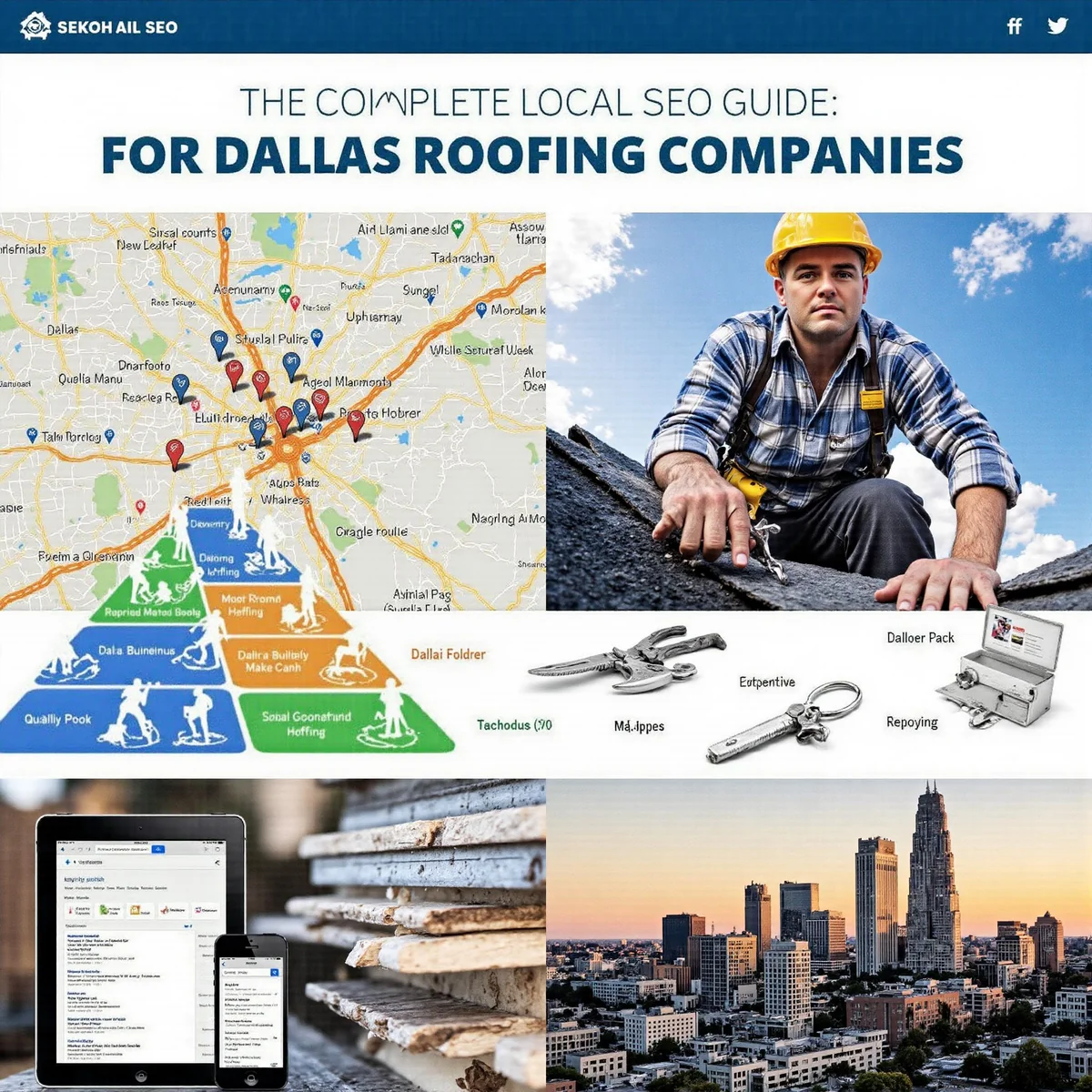
Data Highlight: According to industry reports, websites that appear on Google’s first page (especially top 3) capture over 60% of clicks (wonderful.io[1]). By optimizing pages for Dallas-area roofing terms, you dramatically increase the chance that locals hit your site instead of scrolling past.
Review Strategy and Reputation Management
In local search, customer reviews are a key ranking factor. Prospective clients trust them, and Google uses them too. A proactive review strategy in Dallas means asking every satisfied homeowner or business owner for feedback immediately after a job. Remind them to mention specifics (“great roof replacement on our SMU home” or neighborhood/zip code). Each new review with local keywords adds credibility. On Google Maps, aim for an average rating above 4.5; studies show businesses in the top local pack often exceed this.
Key takeaway: Respond to all reviews – good or bad. Thank customers by name, and if issues arise (e.g. a broken shingle reported), explain how you made it right. This responsiveness not only manages local reputation but also signals engagement to search algorithms.
Beyond Google, ensure your profiles on Yelp, Facebook, and industry directories (such as the Roofing Contractors Association of Texas) are active and updated. Encourage Dallas area clients to review you on these platforms as well. Maintaining consistent information (same address, phone) across review sites is critical. Inconsistent listings confuse Google and customers alike. Consider using a reviews management tool that surfaces if any directory shows outdated info so you can correct it quickly.
AI, Voice Search, and Emerging Query Trends
Search is evolving with AI. People now use voice assistants or AI chat (like ChatGPT) to find local businesses. For example, a Dallas homeowner might ask Siri, “Find a roofing contractor near Deep Ellum.” Google’s new AI (Gemini) and other platforms incorporate local data and Maps to answer. This means your SEO strategy must adapt to what’s called “Answer Engine Optimization (AEO)” (wonderful.io[1]). Essentially, you want your business to appear as a trusted answer in AI-driven results. How? By structuring content with clear Q&A, bullet points, and direct answers to common questions (“What is the best roof type for Dallas weather?”).
Key takeaway: Include an FAQ section on your website that addresses specific Dallas roofing concerns (hail damage, heat resistance, permit requirements). This can be picked up by AI search tools seeking concise answers, giving your business an edge in voice and AI search visibility.
Focus also on “Geo-LLM SEO”. Large language models use contextual clues, so mentioning local landmarks, neighborhoods, and zip codes helps the AI know you serve Dallas. For instance, an AI may look for references like “we operate in Dallas–Fort Worth suburbs” to include your company. Optimizing your site and Google listing with these geo cues and schema ensures you show up when ChatGPT suggests a roofer in Uptown or Addison. Keep an eye on chatbots too; sometimes ChatGPT will craft an answer about local roofers and you want your content to be behind it.
Action Plan: Checklist for Dallas Roofing Companies
Now, distill these strategies into action. Think of your SEO as an ongoing operations plan. Below is a phase-based checklist for Dallas-based roofers:
- Audit and Claim Listings: Verify your Google Business Profile and major directories (Yelp, YellowPages, Angie’s List) with a Dallas address. Correct any outdated or duplicate listings.
- Optimize On-Page SEO: Update your website’s meta titles, headers, and content to include Dallas and nearby areas (for example: “Dallas Roof Repair – Free Estimate 75204”). Add a blog post about a recent local roof project or tip (e.g. “Preparing Your Roof for Dallas Summer Storms”).
- Gather Reviews: Contact customers via email or text and ask for reviews on Google and industry platforms. Provide direct links (Google can send unique review links). Each week, encourage at least 2–5 new reviews if possible.
- Local Links: Reach out to Dallas trade associations (the Roofing Contractors Association of Texas, local Home Builders Association) for directories or guest posts. Partner with nearby businesses (e.g. siding or gutter companies) for link exchanges or joint offers.
- Monitor and Respond: Check your Google Business dashboard for questions or messages. Respond promptly to all reviews and questions. Set monthly reminders to update photos after big projects (new trucks, excited customers, etc.).
- Use Local Ads if Needed: While focusing on organic SEO, consider a small Google Ads budget for keywords like “emergency roof repair Dallas” to complement your strategy, especially in Houston or Austin zip markets where competition is high.
- Track Results: Use Google Analytics or Search Console to monitor traffic from Texas locations (Dallas, Houston, Austin zip codes given). Track call tracking numbers from your site and Maps listing to tie leads back to local search efforts.
Key takeaway: Local SEO won’t pay off overnight. Assign responsibility (an in-house manager or agency) to do a bit of work every week. Review progress quarterly: compare web traffic and calls from Dallas-area zip codes, then refine keywords or content gaps identified.
Frequently Asked Questions
How can I appear in the Google Maps 3-pack for Dallas roofers?
A: Claim and fully optimize your Google Business Profile with Dallas-specific details. Make sure your roof repair business is verified on Google with a complete address in Dallas (or the town you serve). Fill out all information fields, especially categories and services labeled “roofing contractor.” Add clear photos of past roofing projects around Dallas neighborhoods. Encourage satisfied customers to leave Google reviews mentioning the city or ZIP code (for example, “Great roof inspection in 75205”). These steps increase your relevance and push your listing toward the top Map positions.
Q2: What are the most important keywords for Dallas roofing companies?
A: Use location-qualified service keywords. Focus on combining roofing services with geographic terms. For instance, target phrases like “Dallas roof repair,” “75204 roof replacement,” or “Plano roofing contractor” (if extending near Dallas). Include these in page titles and headings. Also consider nearby towns (e.g., “roofers in Denton”) if you serve those areas. Tools like Google Search Console can show which Dallas-related queries people already use to find you; refine content based on those high-intent terms.
Q3: How important are online reviews for local roofing SEO?
A: Extremely important. Online reviews (especially on Google and Yelp) act as social proof and local ranking signals. Most potential customers read reviews before choosing a service. Solicit reviews from every client, and respond promptly to each one. A steady stream of 4+ star reviews not only builds trust but also helps your roofing business rise in local search results. A Dallas roofer with 50 reviews will outrank a similar business with 10, all else being equal. Make review collection a routine part of your workflow.
Q4: How does AI (like ChatGPT) affect my SEO strategy?
A: AI means you must create content that answers user questions directly. Google and other platforms are integrating AI to provide quick answers. For example, someone might ask ChatGPT “best roofing contractor near Houston.” Ensure your web content includes clear, concise answers to common queries (like “How to fix a leak”). Use an FAQ format on your site. Mention your city (Dallas) and services explicitly. By doing so, AI-driven search tools are more likely to cite or display your information in their responses. In essence, treat AI as another search engine – optimize for it by being useful and factual.
Q5: Can I manage local SEO myself, or do I need an agency?
A: It’s possible to do it yourself with the right focus. A skilled owner or marketing manager can set up most local SEO tasks: claiming listings, writing content, and asking for reviews. Use available tools (Google Business app, free analytics) and remain consistent. However, agencies or specialists can speed things up and handle technical details like schema or penalty recovery. Whichever route you choose, the important part is ongoing maintenance: local SEO isn’t a one-time fix. Regular audits and updates ensure you keep up with Dallas market changes.
Sources