
What El Paso’s New Rule Means for Fleets in Texas
Key takeaway: El Paso’s April 28 ordinance is city-specific, but it is still a useful warning sign for Texas fleets: roadside-scene rules can tighten quickly, especially when enforcement and congestion are already elevated.
Key takeaway: Spring work-zone traffic across Texas makes response times less predictable, which raises the value of pre-approved towing, tire, and mobile repair vendors.
Key takeaway: Fleet managers should know exactly who can authorize roadside help, who backs up the primary vendor, and what drivers should do before they start improvising at a crash scene.
Key takeaway: Fast mobile conversion matters because stranded drivers and dispatchers usually search on phones, where Google Maps results, phone numbers, hours, and service areas can decide the next call.
Key takeaway: Service-area accuracy, direct phone routing, and incident-specific FAQs are no longer “marketing extras”; they are part of how a fleet gets help moving again.
Key takeaway: The best response plan treats safety, dispatch, documentation, and local visibility as one system, not separate tasks.
Fleet managers in Dallas and across Texas do not need to treat the April 28, 2026 El Paso towing ordinance as a statewide rule change to learn from it. The value of the announcement is broader: it shows that roadside-scene behavior is getting more attention, not less, and that the moment a driver breaks down or gets into a crash is becoming a more regulated, more competitive, and more time-sensitive environment for towing and repair decisions. El Paso’s public notice listed the ordinance hearing for April 28, and KVIA reported that City Council approved the measure by a 6-2 vote with a June 1 effective date (City of El Paso)[1] (KVIA)[2].
That timing matters because Texas is already in a high-risk spring traffic window. TxDOT says the state has more than 1,800 active work zones, and its April safety messaging pointed to more than 28,000 work-zone crashes in 2025, with 203 deaths, including seven roadside workers (TxDOT)[3]. At the same time, Texas DPS is still pushing Move Over / Slow Down enforcement and warning drivers to pay attention around tow trucks and other roadside vehicles (Texas DPS)[4]. For fleet teams, that combination means less shoulder room, slower recovery, and more pressure to have a defined response process before an incident happens.
For towing operators, roadside-assistance providers, mobile tire shops, diesel repair vendors, and fleet managers alike, the takeaway is simple: the first call and the first click now matter more than the first truck that happens to show up. In a market where roadside solicitation can be restricted at crash scenes and traffic flow is already stressed, fleets need cleaner vendor rules, better driver instructions, and stronger mobile search visibility.
Why the April 28 El Paso ordinance matters beyond El Paso
The El Paso ordinance is the trigger event, but the deeper issue is behavioral and operational. According to the City of El Paso’s public notices, the April 28 council item involved amending towing regulations to prohibit soliciting towing businesses at the scene of traffic accidents (City of El Paso). KVIA reported that the measure passed and will take effect June 1, 2026 (KVIA). That is important for two reasons.
First, it reinforces that roadside-scene conduct can change quickly at the city level. Fleet managers often assume towing, impound, and rescue practices are stable until state law changes. In reality, the local rules that shape who can approach a disabled driver, how a tow is selected, and what happens after a crash can shift market by market. Second, it signals that the “scene” is becoming a compliance point, not just a commerce point. A driver who is shaken up, a lane that is partially blocked, and a shoulder that is too narrow for safe standing create a risky environment for any spontaneous vendor choice.
What this changes operationally
That distinction matters in Texas because this ordinance is not a statewide towing ban. It does not replace the state’s move-over and roadside safety rules, and it does not eliminate the need for towing or recovery. What it changes is the pressure on how roadside help is initiated at the scene. For a fleet, the practical response is not to panic about a new legal regime; it is to tighten procedures so that drivers know when to call dispatch, which provider to call, and how to avoid an unsafe or unauthorized decision in the moment.
The spring timing also matters. TxDOT’s current work-zone campaign is explicitly telling drivers to slow down, pay attention, and give workers space (TxDOT). DPS is simultaneously emphasizing “Move Over or Slow Down” enforcement and reminding motorists that tow trucks are part of the roadside-vehicle category that deserves space (Texas DPS). So even if a fleet is based in Dallas and never operates in El Paso, the policy signal is relevant: roadside response is getting tighter, and the safest path is a standardized, pre-approved one.
How Texas work-zone congestion changes fleet response times
When a truck goes down in or near a work zone, the issue is not only safety. It is also delay. More than 1,800 active work zones across Texas means more places where lane configuration, reduced shoulder access, and lower speeds can slow down a tow or repair response (TxDOT). For fleet managers, that is a direct operational problem: a delay that would be frustrating on a normal shoulder becomes much worse when the truck is in a closure corridor or inside a traffic pattern constrained by cones, barrels, and shifting lanes.
Spring coverage around National Work Zone Awareness Week has repeatedly highlighted just how disruptive that environment is across the state. Work zones compress traffic, make safe stopping harder, and complicate the first few minutes after a breakdown. A driver who can’t fully clear the lane cannot spend extra time searching for a vendor, comparing options, or explaining the problem to a casual passerby. The longer a driver waits without a clear plan, the more likely the situation becomes a safety issue, a billing issue, or both.
How to pre-approve backups
That is why the El Paso rule change should be read through the lens of incident response. If roadside solicitation is restricted or more heavily enforced in a market, the value of a pre-approved vendor rises immediately. The fleet does not want the driver making a last-minute selection under stress. It wants a list that already answers the basic questions: Who is authorized? Who can respond after hours? Who handles light-duty towing, heavy-duty recovery, tire changes, jump starts, and mobile repair? Who takes the call if the first vendor is unavailable?
In practice, work-zone congestion also changes where the first response decision is made. The old model assumed the driver could wait and choose from whichever tow truck appeared first. The better model assumes the fleet has already assigned a vendor hierarchy before the incident. That is especially important when the truck is on a frontage road, a shoulder with no room to stand, or a lane adjacent to active construction. The decision must be safe, fast, and documented, not improvised.
“slow down, pay attention and give workers space” — Marc Williams, TxDOT (TxDOT)
That quote is a useful reminder for fleet policy as well. The more the environment forces slower movement and narrower margins, the more valuable it becomes to pre-plan recovery and repair instead of trying to solve everything on the shoulder.
What fleet managers should audit in roadside-assistance procedures
The right response to this news is an audit. Fleet managers should treat roadside-assistance procedures as a control system, not just a contact list. Texas law and DPS guidance already require drivers to move over or slow down when approaching certain stationary roadside vehicles, including tow trucks with emergency lights or authorized equipment (Texas Transportation Code 545.157) (Texas DPS). That means the driver side of the process needs clear instructions before an incident ever happens.
The first audit question is authorization. Which employees can approve towing, tire service, battery jump starts, roadside fuel, lockout help, mobile repair, or storage? If the answer is “whoever is closest to the incident,” the fleet is too loose. If the answer is one dispatcher with no backup, the fleet is too fragile. Good procedures define both authority and escalation, especially after hours, during storms, and in unsafe shoulder locations.
Where delays usually start
The second audit question is vendor redundancy. A single tow company or mobile repair partner may be fine on paper, but it creates a single point of failure. Fleet managers should verify primary and backup coverage by geography, response type, and time of day. For large service areas or multi-metro coverage, backups should be specific enough to work in practice, not generic “call someone else” names on a spreadsheet.
The third audit question is driver behavior. Drivers should know what to do first after a crash or breakdown: secure the scene, follow police or traffic-control instructions, communicate the truck number and location, and call dispatch before choosing a vendor or negotiating roadside help. The goal is to remove uncertainty from the moment when stress is highest.
The fourth audit question is documentation. Every incident should produce a record of who authorized the response, who was dispatched, when the provider arrived, what was moved, and where the vehicle went. That protects the fleet on billing, liability, and follow-up. It also helps spot patterns: repeated delays, weak vendor response, or recurring incident locations that need a better plan.
The fifth audit question is after-hours and high-risk coverage. If a truck goes down on a freeway connector at night, or in a work zone during a lane shift, the response standard should be higher than for a daytime parking-lot breakdown. The fleet should already know which vendors will respond to those conditions and who will not.
| Old habit | Better practice | Why it matters now |
|---|---|---|
| Waiting for the first tow truck that shows up | Use a pre-approved primary vendor plus backup vendors instead of ad hoc scene decisions. | Reduces delay, confusion, and exposure to unauthorized roadside solicitation. |
| Driver negotiates on the shoulder or at the crash scene | Train drivers to secure the scene, follow police instructions, and contact dispatch immediately. | Improves safety and aligns with Texas Move Over / Slow Down expectations. |
| Generic central call-center number | Use a local number under direct business control with backup routing when needed. | Improves answer rate and trust in mobile-first roadside situations. |
| Broad radius service area | Define service areas by city or postal code and keep them specific and accurate. | Supports better local visibility and more relevant route-to-call behavior. |
| No incident-specific FAQ or emergency page | Publish breakdown, crash-scene, coverage, and after-hours FAQs plus fast-response landing pages. | Cuts friction when a stranded driver or dispatcher is making a fast decision. |
That shift from reaction to procedure is the real lesson from the El Paso ordinance. Even if the ordinance never affects a fleet’s home market directly, the operational risk is the same: if the plan is vague, the situation will be expensive.
Where Google Maps and phone conversion still decide the outcome
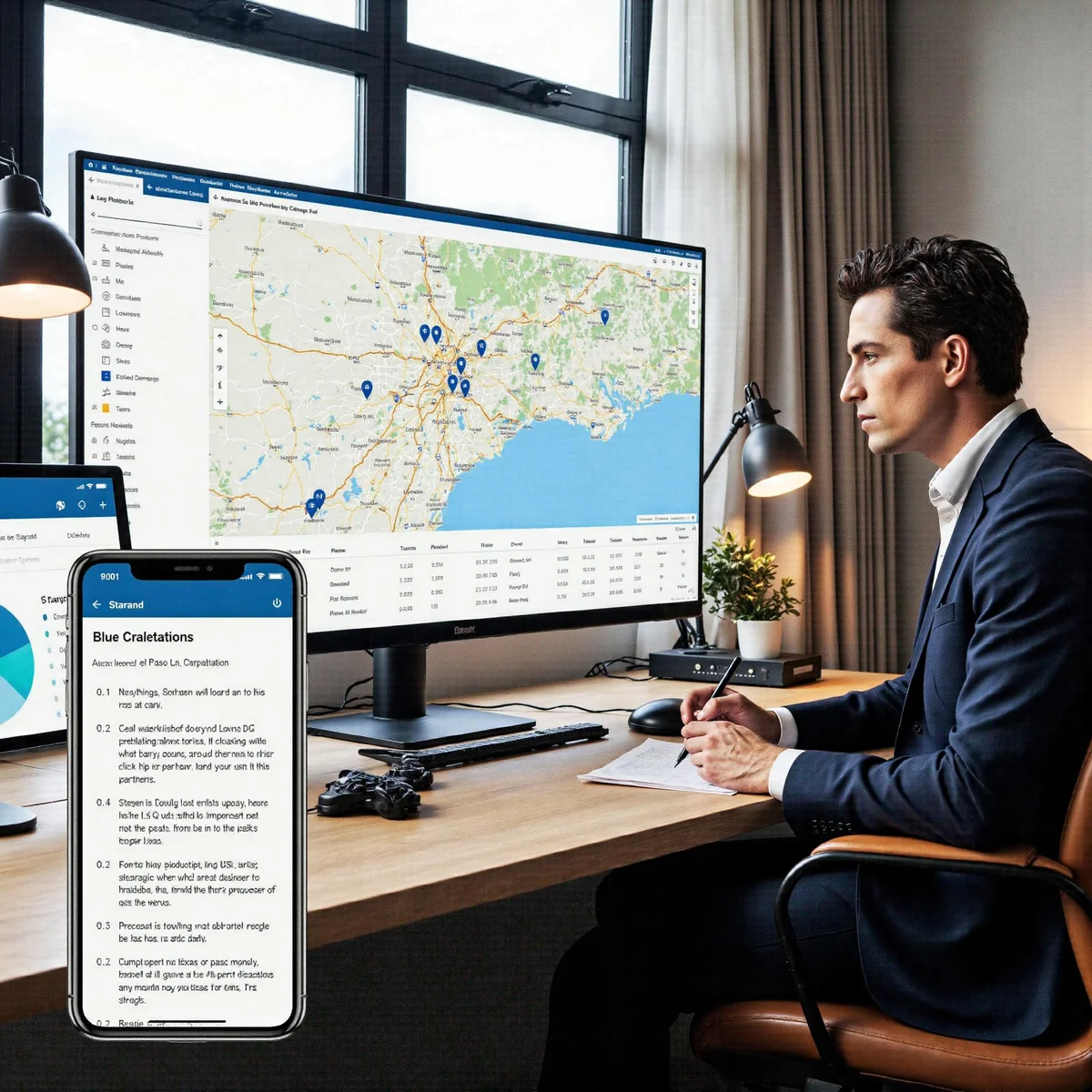
Roadside response is increasingly a mobile-search event. A driver stranded on the roadside is not filling out a form slowly on a desktop computer. A dispatcher handling a live issue is usually trying to get one trustworthy number, one accurate location, and one clear service area as fast as possible. That is why Google Business Profile details matter so much for towing, tire, diesel, and mobile repair operators (Google Business Profile Help).
Google’s guidance makes the point plainly: service businesses can be represented as service-area or hybrid businesses, which fits roadside service models well (Google Business Profile Help). Google also says customers can find a verified profile on Search or Maps and see the areas served, phone number, hours, reviews, and services offered (Google Business Profile Help). For a fleet manager looking for help right now, that information is not branding; it is the decision path.
How to reduce call friction
Google also recommends adding a phone number to the profile so customers can reach the business directly, and it says a local number under direct business control is preferable whenever possible (Google Business Profile Help). That is especially important in roadside situations, where a generic call center can slow down the first response and create uncertainty about whether the call will reach the right dispatch team. Direct phone routing can shorten the time between search and action.
Service-area accuracy matters too. Google says service areas should be specified by city or postal code rather than by radius, and a business can set up to 20 service areas (Google Business Profile Help). For operators serving Dallas, Dallas County, and broader Texas multi-market footprints, that means the listing should reflect actual coverage rather than a vague “we go anywhere” promise. Specificity helps both trust and search relevance.
That is where the trend becomes practical for fleet managers. If the roadside partner’s profile is incomplete, the wrong customer may call, the right customer may hesitate, and a live incident may drift into a delay. If the listing is current, the phone is answered quickly, and the service area matches the fleet’s operating map, the response gets easier immediately. In moments that are already stressful, that small difference can save time and reduce downtime.
What towing, tire, and mobile repair partners should update now
Fleet managers are one side of the equation. Towing, tire, and mobile repair partners are the other. If roadside solicitation is restricted in more places, and if enforcement around work zones and roadside vehicles is heightened, then service providers need stronger inbound conversion paths and clearer public information.
The first update is the service-area page. Operators should make the coverage map obvious and factual. If a provider serves Dallas, Fort Worth, Arlington, or a multi-county corridor, that should be visible in plain language. A fleet manager trying to find the right provider does not want to guess whether a company actually serves the location where the truck is disabled.
Signals fleets look for
The second update is the FAQ set. Crash-scene FAQs, breakdown FAQs, after-hours FAQs, and coverage FAQs should be easy to find from the homepage and service pages. The questions should cover who can authorize service, what information is needed, what happens if the vehicle is at a crash scene, and whether the provider can handle light-duty, heavy-duty, tire, or mobile mechanical work. The more friction removed before the call, the better.
The third update is the review workflow. Google’s Business Profile help surfaces reviews as part of the profile experience (Google Business Profile Help), which means a strong service experience should be followed by a simple review request process. For roadside providers, reviews are not just reputation signals; they are proof points that can help a fleet or stranded driver feel more confident before calling.
The fourth update is the phone path. Direct-to-business routing is still essential. If a provider uses a central call center, there should still be a fast route to the right local team. In an emergency, every extra transfer creates friction. Local control of the number, backup routing, and after-hours coverage should all be tested.
The fifth update is the emergency landing page. A provider that wants to capture live roadside demand should have a page dedicated to emergency towing or roadside help, with short copy, a click-to-call button, service areas, and an explanation of what happens next. That kind of page is especially valuable when drivers are searching in a hurry and need one obvious next step.
The sixth update is consistency. Hours, phone numbers, service areas, and service descriptions should match across the website and Google Business Profile. If the map listing says one thing and the website says another, trust erodes quickly.
For providers serving fleets, this is also a sales process improvement. Clear response terms reduce inbound confusion, shorten the time to dispatch, and improve the odds that the right job is booked the first time. In a market shaped by work-zone delays and stricter scene behavior, that is a real competitive edge.
A simple compliance-and-conversion plan for the next 30 days
Fleet teams do not need a massive project plan to respond well. They need a disciplined one. The next 30 days are enough to tighten procedures, verify vendor coverage, and improve the driver-facing and customer-facing paths that matter during a live roadside incident.
Week 1: audit response procedures. Review current roadside instructions, crash protocols, approval authority, and incident documentation. Confirm that drivers know who to call first and what to do before making any towing or repair decision on their own.
How to keep the plan current
Week 2: confirm vendor coverage and backups. Verify the primary provider for towing, tire service, and mobile repair, then document backup vendors by region and after-hours availability. Make sure the list is current and workable under stress.
Week 3: update driver instructions and landing pages. Rewrite driver-facing breakdown instructions to be shorter and clearer. At the same time, make sure any roadside-service landing pages or partner pages explain service areas, authorization steps, and emergency contact paths.
Week 4: test call routing, map listings, and emergency contact flows. Call the numbers yourself. Check that the right person answers or that the backup routing works. Review the Google Business Profile details for service-area providers, because Google says those details help customers find the business, understand coverage, and make the first contact faster (Google Business Profile Help) (Google Business Profile Help).
The plan works best when safety, dispatch, and local search visibility are treated as one system. If a driver can reach the right vendor fast, if the vendor can answer accurately, and if the fleet can document the incident cleanly, the result is less downtime and fewer surprises.
That is the real lesson from April 28. El Paso’s ordinance may be local, but the operational signal is broader: roadside response is becoming less forgiving, and the businesses that prepare now will have a smoother path when the next breakdown, crash, or work-zone delay happens.
Frequently Asked Questions
Does the April 28 2026 El Paso ordinance apply statewide in Texas?
No. It is a city-specific El Paso ordinance. The broader lesson for Texas fleets is that roadside-scene rules and enforcement expectations can tighten locally, so policies should be ready for market-by-market differences (City of El Paso) (KVIA).
What should a fleet driver do first after a crash or roadside breakdown?
Secure the scene, follow police or traffic-control instructions, move over or slow down where required, and call dispatch or the approved roadside vendor list before improvising at the scene (Texas Transportation Code 545.157) (Texas DPS) (TxDOT).
How many backup towing or repair vendors should a fleet keep on file?
No official source in this research set gives a fixed number. The practical answer is to keep at least one primary vendor and enough backups to cover after-hours, high-volume, and distant incidents so no one is relying on a single point of failure (Google Business Profile Help) (Texas DPS).
Why does Google Maps visibility matter for fleet roadside response?
Because stranded drivers and dispatchers usually search on mobile in the moment. Google Business Profiles can surface the business name, phone number, hours, reviews, services, and service area right in Search and Maps, which can speed up the first call (Google Business Profile Help) (Google Business Profile Help).
What should towing or mobile repair partners update after this ordinance and the spring work-zone surge?
They should update service-area pages, crash-scene FAQs, direct phone routing, emergency landing pages, and Google Business Profile details so the right fleet or stranded driver can reach them quickly (Google Business Profile Help) (Google Business Profile Help) (TxDOT).
Sources
- Public Notices | City of El Paso
- El Paso City Council approves ordinance banning tow truck solicitation at crash scenes | KVIA
- Give ‘em a brake: Drive smart in work zones | TxDOT
- DPS Increases Enforcement for Annual Distracted Driving Campaign | Texas Department of Public Safety
- Texas Transportation Code Sec. 545.157 | DPS PDF
- Business Profile for service businesses overview | Google Business Profile Help