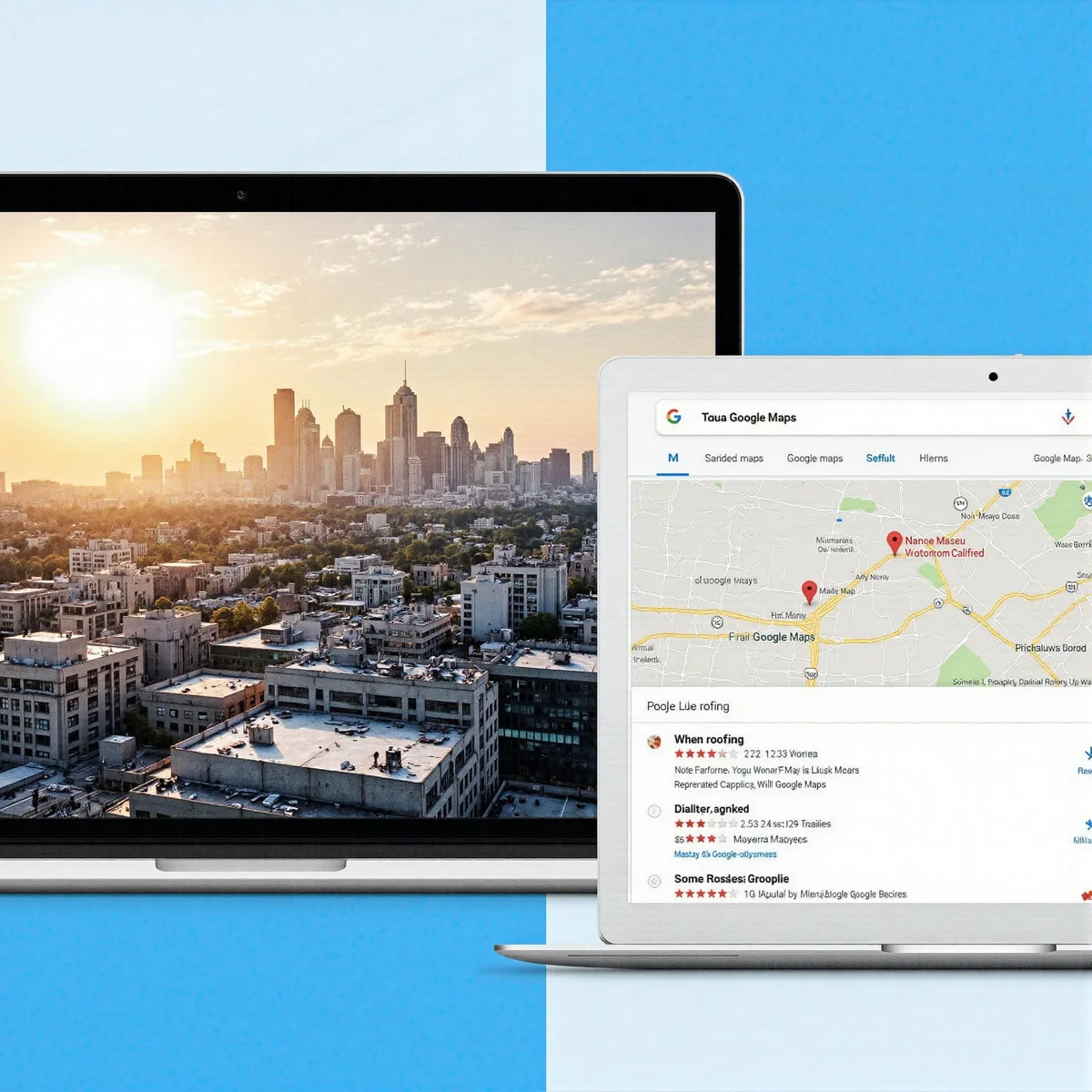
How Dallas Roofers Achieve Proven Google Maps Visibility
Key takeaway: Google Maps is a leading channel for local lead generation and small business marketing in Dallas. Roofers who optimize their local presence can get more leads and turn search traffic into customers by dominating the Map Pack results.
Key takeaway: Accurately fill out your Google Business Profile (GBP). Using your exact legal roofing company name and the most relevant categories is critical. Google’s guidelines emphasize that your profile name “should reflect your business’ real-world name” as it appears on signage and stationery (support.google.com[1]).
Key takeaway: Encourage genuine customer reviews and respond to them. High ratings and frequent reviews boost trust and visibility on Google Maps. Dallas roofers with top ratings stand out in searches and attract more calls.
Key takeaway: Align your website with local SEO best practices. Use Dallas-specific roofing keywords on your site to support your GBP. Google cross-checks your website and map listing for consistency, so adding “Dallas roof repair” on your homepage or services pages helps cement your relevance (support.google.com[1]).
Key takeaway: Keep your profile active with fresh content. Regularly post updates, promotions, and project photos. Google favors active profiles, so an outdated listing will slowly fall behind engaged competitors.
Key takeaway: Prepare for voice and AI search trends. Format your website content as question-and-answer snippets and use schema markup so that AI assistants and chatbots can surface your answers (this is Answer Engine Optimization). Including FAQ sections about Dallas roofing helps with ChatGPT visibility and modern search engines.
Key takeaway: Track and refine your traffic sources. Use Google My Business Insights and web analytics to see which searches and Google Maps queries drive calls or estimate requests. Data-driven adjustments—like improving underperforming keywords—will gradually increase your map rankings and website conversion rate.
1. Dallas Roofing Market & Local Search Landscape
The Dallas–Fort Worth region is a vast metro area with millions of residents and a bustling home services market. Dallas County alone encompasses downtown (75201–75205) and rapidly growing suburbs. In this competitive environment, contractors rely on local search to find customers. When Dallas homeowners or business owners need roof repair or replacement, the first step is often an online search for a local roofing company. Google Maps (the local Pack) captures the top spot for mobile and voice searches like “Dallas roofers” or “roof repair near me.” Converting that search traffic into leads is essential for growth.
Dallas roofers operate under local conditions. Spring and summer storms are common, meaning demand for hail and storm damage repairs is cyclical. savvy businesses prepare for spikes by boosting their online visibility ahead of season. Moreover, areas like Highland Park (75205), Oak Lawn (75219), or Uptown Dallas (75201) feature older homes where roof repair can be urgent. By targeting specific ZIP codes (75201–75205 in Dallas, as well as 77001–77005 in Houston and 78201–78205 in San Antonio nearby), roofers can tailor their local SEO. Even a few index page mentions of “Dallas, TX” or those ZIP codes can help Google associate your business with that service area.
Geographical focus: Tailor marketing efforts to the neighborhoods you serve. For example, a roofer in 75204 (Downtown Dallas) might add posts about servicing high-rise condos, while one near 75205 (Highland Park) might highlight historic home roof restorations. These location signals, combined with a local phone number and address (or service area radius), reinforce your presence to Google and drive more relevant inquiries.
2. Key Google Maps Ranking Factors for Roofers
Google’s local algorithm evaluates three broad criteria: relevance, distance, and prominence. For roofing companies, that means:
- Relevance: Does your profile clearly state you are a roofing company? Are your listing name, categories, and description tightly focused on roofing services? Selecting categories like “Roofing Company” or “Roof Repair Service” ensures Google knows when to show your profile for relevant queries.
- Distance/Proximity: How far your customer is from the business location (or service area). While you can’t control where people search from, you can ensure your service area encompasses all your key zip codes and that your address is precise. A customer in Dallas searching for roof repair is more likely to see profiles of roofers with a Dallas address.
- Prominence: This reflects business popularity and reputation. It includes cumulative factors like the number of reviews and average rating, the SEO strength of your website, and mentions across the web (citations). More citations (consistent listings on home-improvement directories) and more authoritative backlinks can indirectly boost your map rank.
A balance of these factors is needed. For example, a new Dallas roofer with excellent reviews (prominence) but no nearby listings (distance) might still rank lower than an older competitor with moderate reviews but correct location. In practice, you should aim for:
- Setting your business category accurately (the category “Roofing contractor” should be entered in your GBP). Google’s guidelines stress using the minimal number of categories needed to describe your core business (support.google.com[2]).
- Including key roofing keywords organically in your GBP description and website (“roof repair,” “roof replacement,” “Dallas,” etc.). While you cannot stuff the business name with keywords, having them in other places (services list, posts, website) signals relevance to Google.
- Ensuring your NAP (Name, Address, Phone) is consistent across Google, Yelp, HomeAdvisor and other listing sites. Consistency and completeness improve trust with Google, which helps your prominence.
| Ranking Factor | What It Means for Roofers | Optimization Tip |
|---|---|---|
| Business Name | Must match your official legal name. Keyword-stuffed names (like “Dallas Best Roofer”) violate Google’s rules. | Use only your legal business name on Google Profile (support.google.com[1]); move service details into the description field. |
| Primary Category | Determines which queries your profile is relevant to. A category like “Roofing Company” tells Google when to consider your listing. | Choose the most precise category (e.g., “Roofing contractor”) and, if available, relevant secondary service categories (like “Gutter cleaning” or “Solar roof installation”). |
| Customer Reviews & Ratings | High ratings and volume of reviews build trust. Google notes reviews as a key differentiator in local ranking. | Proactively ask satisfied customers to leave reviews. Respond professionally to all reviews to encourage more engagement. |
| Photos & Posts | Active profiles with photos and recent posts signal updates and engagement. Google tends to favor profiles that owners update regularly. | Upload quality photos of completed roofing jobs, team, and equipment. Use Google Posts to announce special offers or tips (e.g., preparing for Dallas storms). |
| Website Authority | Your website’s overall SEO health and local content support your ranking. Google cross-checks GBP info with your site for consistency. | Feature Dallas-relevant content (location pages or blog posts about local roofing topics) and link your site in your GBP. Ensure your site is mobile-friendly and fast-loading. |
| Local Citations | Consistent mentions of your business on directories (with identical NAP) signal to Google your legitimacy. | Claim and update your listings on key directories (Yelp, Angie’s List, local Dallas business associations, etc.) to cement your presence. |
3. Optimizing Your Google Business Profile
Your Google Business Profile (formerly Google My Business) is the hub of your Google Maps presence. A complete and accurate profile is non-negotiable. Start by claiming and verifying your business at business.google.com[3]. Verification (often by mail postcard or phone) signals to Google that you’re legitimate.
Business Name: Enter your exact registered company name. Don’t add taglines, keywords, or city names outside your legal name. Google’s policy states: “Your name should reflect your business’ real-world name, as used consistently on your shopfront, website, [and] stationery.” (support.google.com[1]). For example, if your company is “Ace Roofing LLC,” do not modify it to “Ace Roofing Dallas – #1 Roofer”.
Address & Service Area: If you have a physical office in Dallas (e.g., an office in 75204), set that as your address. If you operate from home or travel to customers, leave the address blank and specify the service area (e.g., “Dallas, TX and surrounding areas”). In either case, use Dallas or the specific ZIPs (75201–75205) as your service area. This ensures your profile can appear for searches in those areas. Google advises keeping your address and service area “accurate and precise” (support.google.com[2]).
Categories: Choose up to 2-3 categories that best describe your roofing business. For Dallas roofers, the primary category is often “Roofing Repair Service,” “Roofing Contractor,” or “Roofing Company.” Secondary categories can include things like “Gutter Installation” or “Solar Energy Equipment Supplier” if relevant. Using precise categories helps Google match your profile to relevant searches without confusion.
Business Description: Use this field to describe your main services and highlight what makes your Dallas-area roofing company unique. Mention location keywords naturally (e.g., “Serving downtown Dallas and North Dallas neighborhoods”). Focus on clarity, as this text can appear in Google’s background knowledge panel. Don’t stuff it with promotional phrases – just useful info.
Contact Info & Hours: List your local phone number (avoid toll-free if possible) and your website URL. Set your hours accurately. If you offer emergency roof repairs or 24/7 service after storms, include that in your description and set your hours accordingly. Outdated hours can frustrate customers and hurt conversions.
Photos & Videos: Upload high-quality images of your team, vehicles, and recent projects. Roofing work pictures (before/after) are particularly engaging. Google reports that profiles with photos get more clicks for directions and more calls (research shows businesses with photos receive up to 42% more requests for directions and 35% more clicks to their websites, according to Google). Include at least one exterior shot with a visible sign or truck (to match your branding). If possible, also add a short introductory video about your company. These visuals enrich your profile and build trust.
Google Posts: Treat your profile like a social media feed. Post updates about recent job highlights (e.g., “New roof completed in Uptown Dallas!”), special offers (discount on roof inspections), or timely tips (“How to prep your roof for hail season”). Posts last about a week, so update regularly. Fresh posts signal Google that your business is active, which can give you a slight edge in Maps rankings.
Attributes: Use the attribute features to note things like “Veteran-owned,” “Offers on-site estimates,” or “BBB Accredited.” These details help searchers filter and choose your business. Make sure any offered attributes are truthful; incorrect attributes will be flagged.
FAQs and Q&A: Check the Questions & Answers section. Proactively populate it by asking and answering common questions (e.g., “What’s your typical project timeline?” or “Do you handle insurance claims?”). Prioritize questions Houston or Dallas customers often ask. Google allows anyone to answer, so seeding them yourself prevents misinformation by competitors or bots.
4. Local SEO Strategies & Website Alignment
Your Google Profile doesn’t operate in isolation. Google cross-references your profile data with your website to confirm consistency and relevance (www.localroofingseo.agency[4]). If your site lists roofing services in Dallas and your profile says you serve Dallas ZIPs, that coherence strengthens your map ranking. Conversely, if your website is generic or lacks location references, it weakens your Maps performance.
Local Landing Pages: Create clear location signals on your website. If you serve multiple areas (e.g. Dallas, Plano, Arlington), consider separate service-area pages or sections labeled with each city. On each page, use on-page SEO best practices: an H1 like “Dallas Roof Repair Services,” meta description with your city, and content that mentions neighborhoods or local landmarks. This GEOTARGETED content tells Google which region each page serves. In effect, it feeds the same local relevance that your ZIP codes do in Google Maps.
NAP Consistency on Site: Embed your name, address, and phone number (NAP) on your site — typically in the footer or contact page. Format it exactly as in your Google Profile. You can also embed a Google Map with your address pin. Consistency prevents confusion in search algorithms and helps your domain rank alongside your GBP. Use schema markup (JSON-LD) for LocalBusiness or RoofingContractor that includes your address, opening hours, and even review ratings. Schema markup makes it easier for Google’s semantic search to pull your info into rich results or voice answers.
Keyword Optimization: Think about the search terms Dallas customers use. “Roof repair Dallas TX,” “roofers near 75204,” or “best roofers Uptown Dallas.” Incorporate these phrases naturally in your page titles, headings, image alt-text, and content. Avoid random stuffing; instead, use variations (include neighborhoods or ZIP codes where relevant). For example, a service page might be titled “Residential Roof Repair in Dallas, TX.” These local keywords align your website content with local intent queries, supporting your Google Maps presence.
Mobile & Conversion Focus: Most local searches happen on mobile devices. Ensure your site is mobile-responsive and loads fast (pages under 3 seconds). Feature a clear call-to-action on each page, like a “Request a Free Estimate” button, and make phone numbers tap-to-call. website speed and usability indirectly impact Maps visibility by improving user experience. High conversion from search means Google sees your listing as satisfying users, which can further boost your profile’s prominence.
Backlinks & Local Signals: Acquire links from local Dallas or Texas–focused sites. For example, get listed on Dallas community websites, or articles on neighborhood blogs or commercial landlord resource pages. Sponsor a Dallas charity event and ask to be listed on their site. Each local backlink is a signal that reinforces your geographic focus. Similarly, make sure you appear on well-known online directories and social profiles (Facebook, LinkedIn, Yelp). These citations don’t need to have keyword-laden names, just accurate information. Consistent NAP across these sites acts like a digital “business card” validating your legitimacy to Google.
5. Reviews and Reputation Management
For roofing companies, trust is paramount. Many homeowners choose a roofer based on reputation. Google has openly said that reviews are a ranking factor in local search. A strong review presence can push you into the top three Map Pack spots. Conversely, no or low ratings can cause Google to de-prioritize your listing.
Encourage Client Reviews: After completing a job, politely ask satisfied customers to leave feedback on your Google Profile. You can send a follow-up text or email with a direct link to your Google review form. The easier you make it, the more customers will comply. (Example: “Click here to review our roofing service” links straight to the profile.)
Respond Quickly and Professionally: Always acknowledge reviews—both positive and negative. Thank customers for praise. For criticisms, thank them for feedback and offer to resolve the issue privately. Timely and courteous responses improve perception for onlookers and signal to Google that you are engaged. In Dallas’s tight-knit communities, a few visible review replies can set you apart from roofers who ignore feedback.
Review Quality Over Quantity: While the number of reviews matters, their quality and recency do too. Several five-star reviews in the last month send a stronger signal than a handful of old ones. Dallas roofers experiencing busy seasons can mention storm relief in posts and then encourage quick reviews (e.g., “Thanks for trusting us after the big May hailstorm! Let us know how we did.”).
Avoid Fake or Manipulated Reviews: Strategically, reviews should reflect real experiences. Both Google and the FTC prohibit deceptive practices like paying for reviews or only soliciting feedback from happy clients (“review gating”). Violating these rules can get your reviews removed or your profile suspended. If you ever face a fake negative review (e.g., from a non-customer or bot), you can flag it in Google My Business and request removal on grounds of being false.
Reputation Beyond Google: Many Dallas home and business owners also check sites like Angie’s List, Yelp, and the Better Business Bureau (BBB). Maintain consistent NAP info on these profiles as well. Good reviews on multiple platforms can indirectly help your Google rank and definitely improve customer trust. At the least, claim your Yelp and BBB profiles and ensure your business info matches your Google listing.
Local Awards and Certifications: If your roofing company has any local awards (e.g., “Dallas A-List Best Roofer”) or certifications (NWFA Certified, etc.), highlight these on your site and mention them on Google Posts or Q&A. While not direct ranking factors, they reinforce reliability. Dallas customers seeing an official award or association may be more likely to choose your service over others.
6. AI, Voice Search & Emerging Trends
The search landscape is evolving fast. Voice assistants, chatbots, and AI-driven search mean your online visibility is not just about traditional Google Maps anymore. Consider these trends for future-proof local SEO:
- Voice Search Queries: Many Dallas residents use voice assistants (“Hey Siri/Ok Google”) to find services. These queries are often question-based: “Where’s a roofer near me?” or “Who fixes roofs in Richardson TX?” To capture voice search traffic, make sure your website and FAQs use natural language resembling how people speak. Phrases like “roofing contractor in Dallas” should also appear as full sentences or questions in your content.
- AI Chat Tools (LLM SEO): Platforms like ChatGPT or Google’s Bard can answer user questions directly. To appear in these AI-driven answers, your content should clearly answer common questions. For example, on your site you might have an FAQ section answering “What types of roofs do you repair in Dallas?” and “How do I know if I need a new roof?” Content structured in lists, Q&A, or bullet points is easier for AI to parse. Including schema markup for FAQs and Q&A can help search and AI systems surface your answers.
- Local Intent Optimization: “AEO” (Answer Engine Optimization) is about specifically optimizing for search engine answers. One tactic is to use Google’s People Also Ask and related searches as inspiration. For instance, if questions like “cost to repair roof in Dallas” or “Dallas storm damage help” appear, create content addressing those queries. Google might pull a featured snippet or answer card from your content into search results, which can elevate your profile in map searches.
- Real-Time Updates: Google sometimes showcases timely information in Maps, like current busy times or popular times. While this is more applicable to restaurants, maintaining active updates could signal freshness. For example, immediately after a hailstorm, posting an update “Now booking emergency roof inspections for Dallas hail victims” could help you appear for related urgent searches.
- Multi-Channel Visibility: Besides Google, ensure you’re optimized for Bing Places and Apple Maps as well. Bing and Siri can drive additional traffic with fewer competitors. Claim your Bing Places listing and populate it similarly. The principles remain the same: accurate info, great photos, and active management.
By integrating these emerging concepts – from voice-friendly content to AI-optimized Q&A – Dallas roofers can stay ahead. Even if chatbots are emerging, remember that T-shirts and trucks still drive the bulk of leads; these strategies simply ensure your business isn’t overlooked by any new search technology.
7. Actionable Playbook for Dallas Roofers
Turning all the above into practice calls for clear steps. Here’s a checklist to embed these local SEO moves into your workflow:
- Claim and Verify Profile: Immediately claim your Google Business Profile and any other listing (Bing, Yelp, etc.), then complete verification. This is fundamental before any further improvements.
- Information Audit: Double-check your name, address, phone, and categories. Ensure the name matches legal business name exactly (no extras) (support.google.com[1]). Use a Dallas street address or clearly set the service area to cover 75201–75205 for maximum relevance.
- Website Local SEO: Update your site to include Dallas identifiers. For example, an H1 like “Dallas, TX Roofing Services” and mention local neighborhoods. Use Schema LocalBusiness markup for address and service area. Verify that your site’s contact page includes your Dallas address and links to Google Maps.
- Photo & Post Routine: Schedule weekly posts or photo uploads on your GBP. Even if you simply post a safety tip or a picture from a recent project, it keeps your profile active. Set a reminder to do this each Monday.
- Review Campaign: Develop a system to ask for reviews on every completed job. Create a weakly-prominent card or email template that nicely reminds clients to review. Track your average rating and target surpassing your local competition.
- Monitor & Adapt: Use Google My Business Insights to see which queries brought views to your profile. Are they “roof repair near me” or something else? Adjust your GBP description and website keywords accordingly over time.
- Evaluate Competitors: Occasionally search Google Maps for “roofers near 75204” and note who tops the list. Examine their profiles: do they have tons of reviews? Many photos? Use these clues for new tactics (e.g. if competitor posts lots of FAQs, do the same).
- Mobile & Analytics: Test your website on mobile after updates. Check Google Analytics or CallRail data to attribute leads to local search. Track form submissions or calls labeled “Google Maps,” and watch those numbers rise as you implement changes.
- Legal and Quality Control: Comply with Texas contractor rules (license, insurance) as these affect customer trust. While not directly an SEO factor, showing badges or license info in your profile can indirectly boost conversions.
- Community Outreach: Build local links by sponsoring or participating in Dallas community events (Little League, Rotary, local home shows). If your logo or business name appears on event pages, that’s a geo-relevant citation. Similarly, write a brief heartfelt review for a supplier (e.g., local lumber yard) – they might do the same for you, creating mutual referrals online.
Key Tools: Use Google’s free Business Profile dashboard and insights. Consider a local SEO tool (like BrightLocal or Moz Local) to audit citations. Track rankings with any rank-tracker by entering target keywords like “Dallas roof repair.” For AI trends, try QueryStream or AnswerThePublic to find new question-based content ideas. Finally, set reminders to revisit and update your profile quarterly.
Blockquote: “Your name should reflect your business’ real-world name, as used consistently on your shopfront, website, stationery and as known to customers,” says Google’s official guidelines (support.google.com[1]). Treat this as Gospel when editing your GBP.
Sources & Further Reading
- Google Business Profile Guidelines[5] – Official Google documentation on how to accurately set up and maintain your Business Profile (support.google.com[1]).
- Google Search Central (Webmasters)[6] – Guides from Google for small businesses and SEO, including Local SEO best practices for websites and profiles.
- U.S. Small Business Administration (SBA): Market Your Business[7] – General marketing advice for small businesses (emphasizes online presence and local marketing).
- U.S. Census Bureau – Dallas Metro Statistics[8] – Demographic and economic data for Dallas County (useful for understanding your market size and customer base).
Frequently Asked Questions
How important is Google Maps for a Dallas roofing business?
Google Maps is extremely important for local businesses because a large percentage of customers search for roofing services using map queries. In practice, many Dallas clients will find roofers through Google Maps and contact the top-listed company. Thus, optimizing your Business Profile so you appear in the Map Pack is often more impactful than general SEO. If your profile ranks high, inquiries and calls can increase dramatically.
Make sure your profile is fully filled out and checked regularly, as the cost of missing these leads can be significant. In fact, a study by Google found that the majority of local service searches lead to a visit or contact with a business within 24 hours.
What should I not do on my Google Business Profile?
Do not deviate from official guidelines. Famous pitfalls include: adding marketing phrases to your business name, soliciting only positive reviews, or leaving your profile incomplete. For example, Google explicitly warns: “Your business name should reflect your real-world name” (support.google.com[1]). Also avoid review gating or paying for reviews; these violate Google’s terms. Instead, follow Google’s rules to maintain a stable listing and protect your ranking.
How can I get more reviews without sounding pushy?
After a job is completed, thank your customer and ask if they’d share their experience online. A friendly follow-up email or text with a direct link to your Google review page can make it easy: e.g. “Thanks again for choosing us to repair your roof. If you’re happy with our work, we’d appreciate a quick review here: [link].” Mention how reviews help you serve the community better. Most customers are happy to comply if the request is polite and convenient.
How often should I update my Google Business Profile?
At minimum, review your profile monthly. Check for new review responses, confirm your hours and contact info (update for holidays), and add fresh photos every few weeks. If you have seasonal promotions (e.g., winter roof maintenance offers), post those at the relevant time. The key is to avoid letting your profile “go stale.” Even small posts or photo additions will signal to Google that your business is active, helping sustain or improve your visibility.
Will optimizing my website really help my Google Maps ranking?
Yes. Google looks for consistency between your website and your Business Profile. If your website prominently showcases the same services and locations as your profile, it reinforces Google’s confidence in your listing. Ensure your website mentions Dallas or target ZIPs and includes your profile link. Improve your site’s local SEO (with headers like “Dallas Roofing Services”) to back up your GBP. When Google sees your site consistently talking about Dallas roofing and showing your verified address, it’s more likely to display you in Dallas map searches.