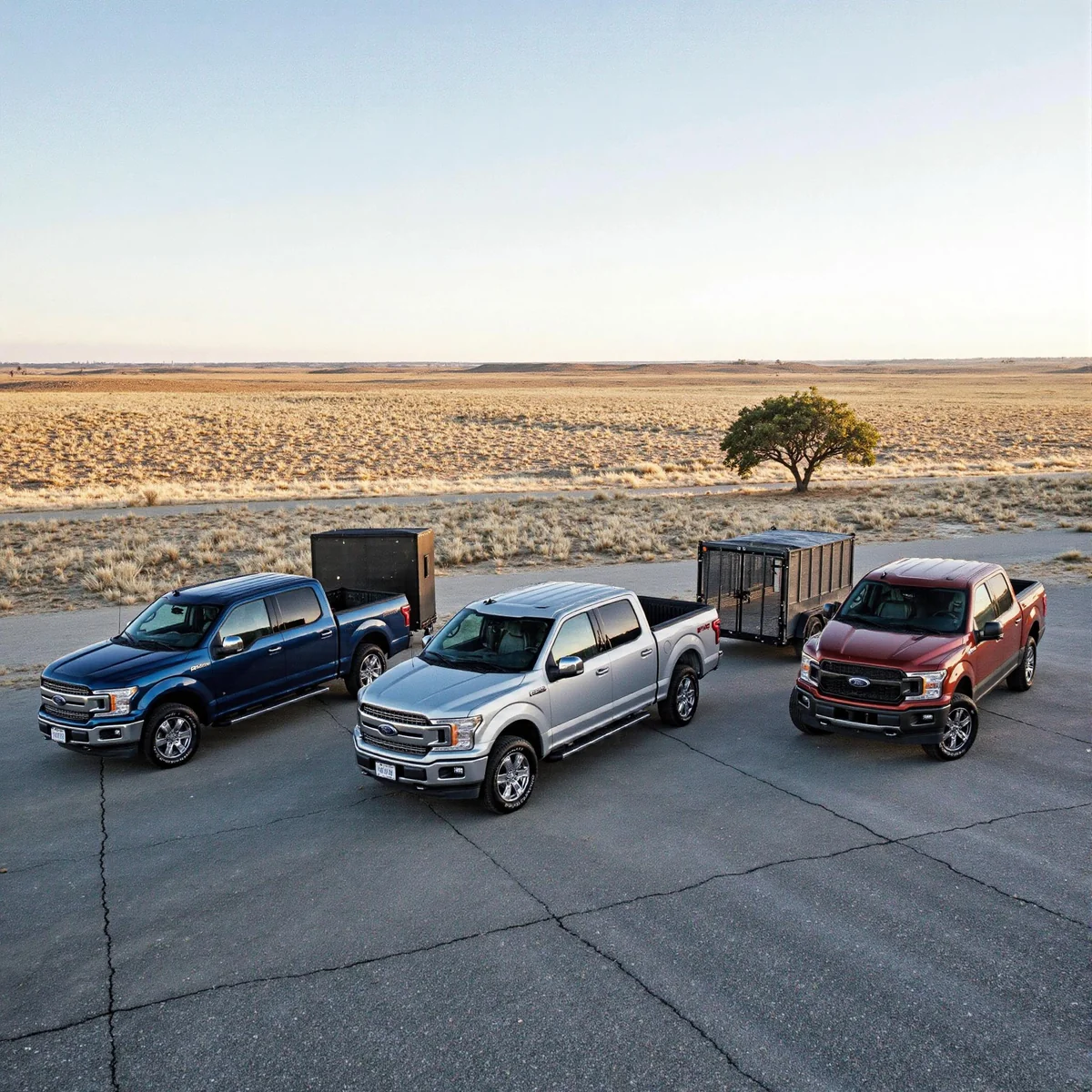
Simple, Proven F-150 Towing Capacity Checklist for Your Lubbock Fleets
Understanding F-150 Towing Capacity for Texas Fleets
Fleet operators using Ford F-150 pickups in Texas must begin with the truck’s manufacturer specs. The 2023–2024 Ford F-150, when equipped with the proper towing package, supports up to about 4,500 kg (approximately 9,920 lbs) of trailer weight (www.carsguide.com.au[1]). This rating depends on engine choice, wheelbase, and whether the truck has optional towing features. For example, a Ford F-150 with the Max Trailer Tow Package and the 3.5L V6 EcoBoost can reach roughly this upper bound. Always verify your truck’s tow rating and Gross Combined Vehicle Weight Rating (GCWR) from the Ford data plate or owner’s manual. In practice, an F-150’s actual tow limit is typically a bit lower when you account for passengers, fuel, and cargo. Towing beyond these manufacturer limits not only overwhelils the vehicle, but also risks voiding warranties and violating Texas weight laws (www.txdmv.gov[2]). Key takeaway: Always subtract the truck’s own weight and cargo from the F-150’s rated capacity before hooking up a trailer.
Local operators continue to ask about F-150 towing capacity Dallas fleet, so we address it directly in this guide.
- Trim matters: A SuperCrew 4×4 with a 157″ wheelbase usually tows more than a Regular Cab. Diesel or larger-engine models often have higher tow ratings, but also heavier curb weight.
- Payload impacts towing: Ford F-150 payload (truck bed cargo) is typically 800–2,000 lbs. Heavy cargo reduces how much trailer weight you can haul within the GCWR.
- Smart Hitch systems: Newer F-150s may include Ford’s on-board scales to estimate tongue weight and total load. Use this to verify you’re under rated limits before departure.
Texas Weight Limits and Regulations
Texas law strictly caps how much weight a truck and trailer combination can legally carry on public roads. The Texas Size/Weight Limits[3] state that the maximum gross vehicle weight for any vehicle combination is 80,000 pounds (www.txdmv.gov[2]). This gross weight includes the F-150, the trailer, and all cargo on both. In practice, a typical F-150 towing a loaded trailer is far below this legal ceiling, but remember that the weight of a full gasoline tank, passengers, and bed load all count. The state also limits how much weight can ride on each axle (20,000 lbs on a single axle, 34,000 lbs on tandem axles, etc. as per the TxDMV Permissible Weight Table (www.txdmv.gov[2])). Texas requires an oversize/overweight permit from TxDOT if you exceed any of these limits.
Local operators continue to ask about Ford F-150 fleet towing checklist, so we address it directly in this guide.
Texas has established size and weight limits for vehicles and loads moving with or without an oversize and/or overweight permit on Texas roadways and bridges (www.txdmv.gov[4]).
Locally, Dallas County and other municipalities may have additional guidelines for commercial towing and parking. For example, heavy trucks often must stay in right lanes on I-35 or limit speeds on I-45, and construction zones can impose lower weight ratings. When routing a heavy F-150 tow, remember that Texas interstates like I-35 northbound from Dallas or I-45 southbound from Dallas have steep grades and heavy traffic. Plan for slower speeds on these corridors. Also note that certain city streets around Dallas, San Antonio, and Austin restrict truck traffic during rush hours or have posted weight limits on local bridges.
Key takeaway: The total weight of truck, trailer, and cargo must stay below Texas’s 80,000 lbs limit (www.txdmv.gov[2]). Use official TxDMV weight tables to verify your configuration, and get a permit if needed before travel.
Pre-Trip Inspection: The Ultimate Towing Checklist
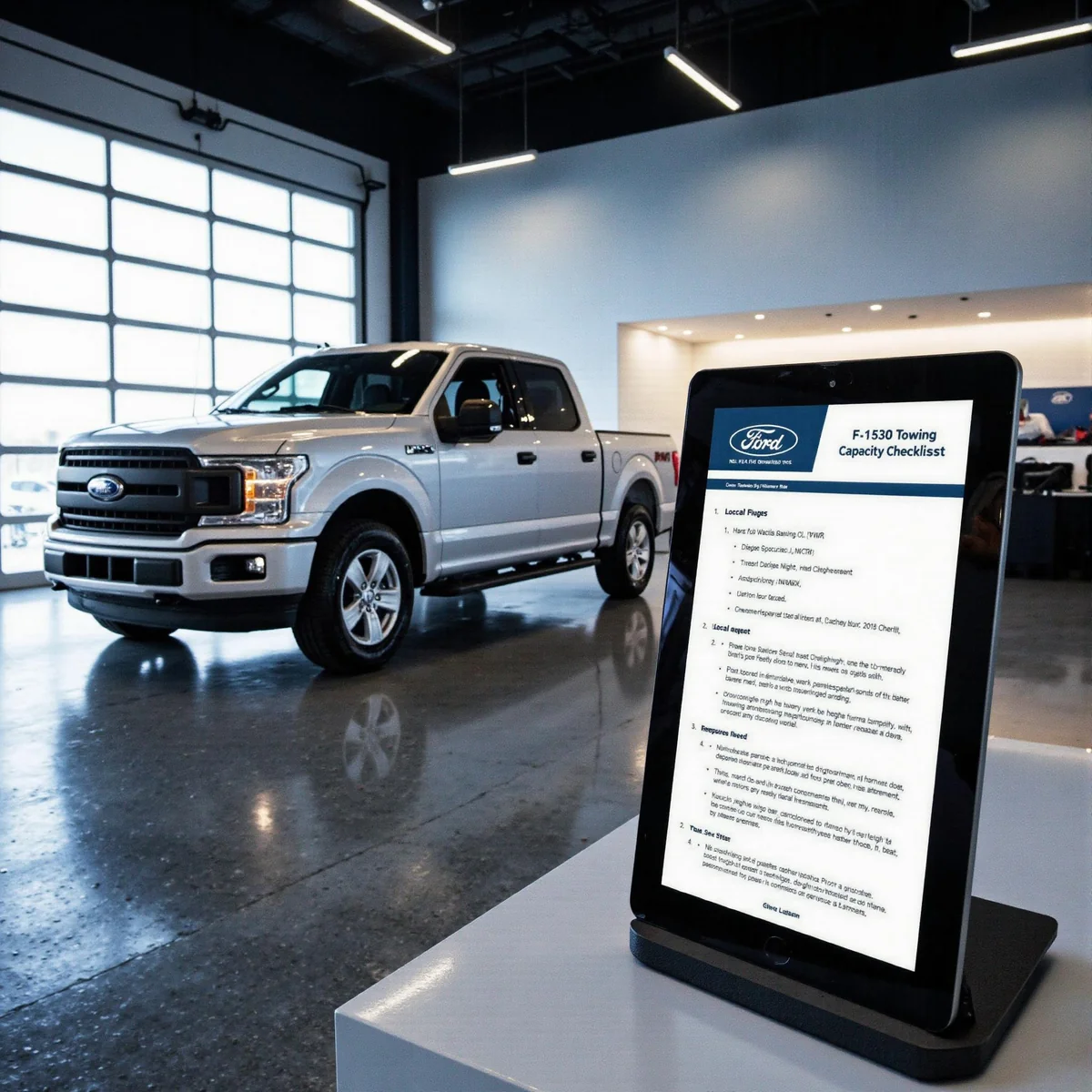
Before every tow, operators should run through a thorough checklist. Important steps include:
Local operators continue to ask about Dallas fleet insurance for towing, so we address it directly in this guide.
- Verify Hitch, Receiver, and Tongue Weight: Ensure your F-150 has the correct hitch class for the trailer. A Class IV or V receiver is typical for heavy towing. Check that the ball size matches the trailer coupler. Confirm tongue weight is about 10–15% of trailer weight to maintain stability on Texas highways.
- Check Lights & Wiring: Test all trailer lights (brake, turn signals, running lights) at the hitch control. Faulty wiring is a common cause of accidents and citations. Carry spare fuses and bulbs for on-the-road fixes.
- Inspect Tires on Truck and Trailer: Inflate tires to the pressures recommended on the door placard and trailer manual (often 35–70 PSI on F-150 depending on load). Visually inspect for cuts, bulges, or uneven wear, which worsen when towing. Remember to check the spare.
- Load Securement: Distribute cargo so heavier items are forward on the trailer. Use high-quality loading straps or chains rated above the load, anchored to trailer tie-down points. Shifted cargo can overload the rear or cause sway on curves.
- Brake System Check: In Texas, trailers over about 2,500 lbs (or if so equipped) require their own brakes. Before hitting the road, test the trailer brake controller in the F-150 to ensure the trailer’s electric brakes activate. Bleed or adjust brakes periodically according to Ford’s maintenance schedule.
- Fluid and Engine Check: Towing heats up engines and transmissions. Top off coolant and transmission fluid suitable for towing-intensive use. Verify the engine oil is clean and at full level, and the cooling fan and radiator are clear of debris (Texas dust can clog fins).
- Mirrors and Cameras: Adjust the F-150’s tow mirrors so you have clear views around the trailer. If available, use the truck’s 360° camera or trailer reverse guide to help line up your hitch and to see blind spots.
Use a written or digital checklist to never skip steps. Some fleets place laminated checklists on a clipboard or in the truck cabin. Doing these inspections every time reduces breakdowns and prevents code violations. For example, a missing taillight could draw a $200 citation in Dallas, while a failing trailer brake might court jail time if it leads to a crash.
Table: Towing Configurations and Requirements
| Trailer Weight Range | Hitch Class & Accessories | Brake Requirements | Texas Regulations & Tips |
|---|---|---|---|
| Light: under 2,000 lbs | Class I–II receiver; simple ball hitch | No braking legally required, but surge brakes recommended if over 1,500 lbs | Typically no permit needed. Ensure trailer tongue is drawn up to tongue weight. Watch for sway at highway speeds. |
| Medium: 2,000–5,000 lbs | Class III receiver; fixed or adjustable hitch | Electric brakes usually required (check specific weight thresholds) | Get proper trailer license and insurance. Use weight-distribution hitch for stability when loaded. Verify lights on every trip. |
| Heavy: 5,000–10,000+ lbs | Class III or IV receiver; weight-distribution hitch strongly recommended | Electric trailer brakes manual or proportional control required by law | Likely triggers supplemental inspection. Texas law requires brakes for trailers above roughly 2,500 lbs. Do a dry-run drive on local roads before highway. |
| Oversize/Tandem: >10,000 lbs | Class IV–V receiver; custom launch gear | Full electric or hydraulic braking system | Requires TxDOT permit if combined weight nears legal limits. Plan route to avoid low-clearance and high-traffic zones. Double-check load security. |
Local Hazards & Operational Tips
Dallas-area fleet operators should be mindful of regional factors. Summer heat in Texas can accelerate engine overheating, so never tow with a known coolant leak. Texas hailstorms also threaten exposed trucks and trailers during spring; covering parked fleets with heavy-duty polyester covers can save thousands in damage. Local highways like I-35 (Dallas–San Antonio corridor) and I-45 (Dallas–Houston) are major freight routes. On these roads, trailers add length and reduce maneuverability—plan extra following distance for sudden stops. In downtown Dallas or San Antonio city limits, watch for low truck bridges and local truck bans (often well-signed). Near DFW Airport, freight routes encourage use of SH 161 and I-635; any detours for construction could route you past congested cement plant or port-access lanes.
Local operators continue to ask about hail damage mitigation for trucks Dallas, so we address it directly in this guide.
Case Highlight: A Dallas HVAC service fleet once missed a simple inspection: a camper trailer’s breakaway switch had failed. The operator didn’t realize the trailer brake wasn’t armed, and on a busy I-35 merge, the trailer pushed the F-150 into a guardrail. Besides costly repairs, this triggered an insurance audit since the setup didn’t meet Texas brake laws. Lesson: always test your brake controller and emergency brake mechanisms on trailers.
Key takeaway: Even minor oversights (loose wiring, underinflated tires) can cause a major incident on Texas freeways. Use local weather apps and traffic alerts to avoid storms and heavy congestion during your tow.
Maintenance, Insurance, and Compliance
Regular maintenance extends towing reliability. Ford’s recommended schedule for trucks (email dealer schedules) should be followed, with extra focus on brake checks, wheel bearings, and suspension torque. For fleets, maintain a log of towing-specific maintenance to support insurance claims. Speaking of insurance, make sure your policy covers commercial towing. In Texas, trucks and trailers typically need commercial liability plus comprehensive coverage. If your fleet hitches on trailers for business, clarify if those add-ons fall under the main auto policy or a separate endorsement. Deductibles for comprehensive events (like hail on a parked trailer) can often be minimized if you carry a fleet or commercial package. The Texas Department of Insurance notes that properly documenting vehicle use and maintenance helps keep premiums steady and ensures coverage clarity (www.txdmv.gov[2]).
Local operators continue to ask about Texas fleet payload limits F-150, so we address it directly in this guide.
Be aware: under Texas Transportation Code, you have the right to use any qualified repair facility after an accident or damage. Some insurers may suggest “preferred” body or alignment shops, but you can choose a certified Ford service center or experienced commercial shop instead. Always request OEM or equivalent replacement parts for safety components (brake hoses, lighting harnesses, etc.) – subpar parts are a common insurance negotiation point.
Frequently Asked Questions
Q: How do I determine my F-150’s max towing capacity?
A: Consult the F-150’s door jamb placard and owner’s manual for precise ratings. For example, a well-equipped 2023 F-150 can tow up to about 4,500 kg (≈9,920 lbs) (www.carsguide.com.au[1]). The manual also gives Gross Combined Vehicle Weight Ratings (GCWR) and trailer weight charts. Always subtract the truck’s curb weight and cargo from the GCWR to find your true towing limit.
Q: What maintenance should I do before a heavy tow?
A: Perform a comprehensive inspection: check tire pressures, brakes, fluids, and lights. Ensure the truck’s suspension and engine cooling system are in top shape (towing heats up both). Stick to Ford’s recommended service intervals, and inspect the trailer’s brake operation and bearings. Quick tip: let the engine idle for a minute after a hot trip to cool off the turbo and transmission.
Q: Are Texas weight limits an issue for a typical F-150 tow?
A: Rarely. Texas allows up to 80,000 lbs combined (www.txdmv.gov[2]), which is far above any F-150 tow scenario. However, you must include the truck, trailer, and all cargo in that total. Stay well under the 80k cap by keeping light loads and using the proper trailer class. Permits are only needed if you truly exceed those limits, which is uncommon for pickup trailers.
Q: Do I need trailer brakes when towing in Texas?
A: Yes. Texas law requires trailer brakes if the towed weight is above about 2,500 lbs or if the trailer has a gross weight over a lower threshold. In practice, any trailer above 3,000–4,000 lbs should have an electric brake system, and your F-150 must have a functioning brake controller. Always lock or set the breakaway switch on the trailer so it can stop itself in an emergency.
Q: How does towing affect my insurance?
A: Towing heavy loads can influence your insurance in two ways: first, you may need a commercial or fleet policy that covers hauling trailers. Second, after an incident, insurers will check if your equipment was up to spec. Keeping service records and operating within rated limits (GVWR/GCWR) is crucial. In Texas, comprehensive coverage will handle events like hail damage to your towed trailer, but verify any deductible specifically for your fleet’s autos and trailers.
Sources